You’ve probably thought about reducing waste at some point. Maybe you noticed how full the kitchen bin gets each week. Maybe you’ve felt uneasy throwing away plastic packaging that barely served its purpose. Or maybe you simply want to live a little lighter, without overcomplicating your day.
But here’s the part that often stops people: zero waste can feel overwhelming.
It can look like a complete lifestyle overhaul. Homemade cleaning products. Glass jars everywhere. Strict rules. No room for convenience.
In reality, a zero waste lifestyle for beginners doesn’t start with perfection. It starts with small, repeatable choices that fit into real homes and real schedules.
If you’re someone who cares about sustainability but doesn’t want another full-time project, this guide is for you. You don’t need to replace everything you own. You don’t need to be extreme. You just need to start where you are.
And that usually begins in the kitchen, the bathroom, and the way you shop.
What Is a Zero Waste Lifestyle?
A zero waste lifestyle is a way of living that focuses on reducing the amount of waste you send to landfill by preventing waste before it is created.
Instead of relying mainly on recycling, zero waste encourages smarter consumption habits, reusing what you already have, and choosing products that generate less rubbish in the first place.
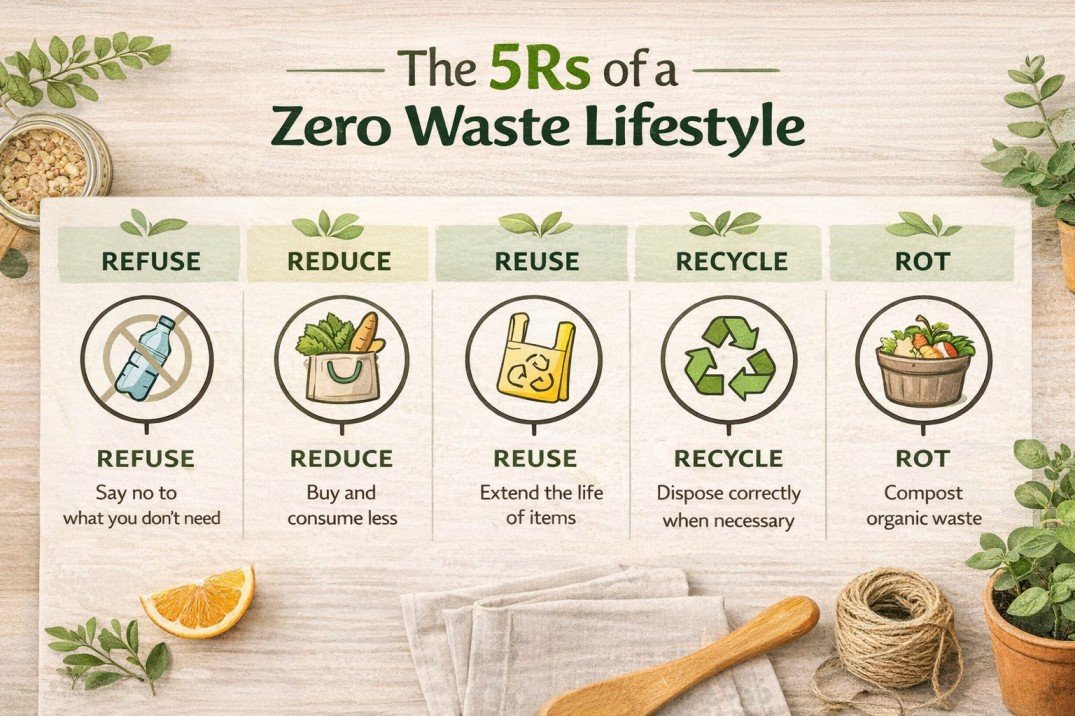
At its core is a simple framework known as the 5Rs:
- Refuse what you do not need
- Reduce what you do need
- Reuse items as long as possible
- Recycle what cannot be reused
- Rot (compost) organic waste
The order matters. Recycling is not the first step. Prevention is.
For beginners, this does not mean eliminating every piece of waste overnight. It means gradually shifting everyday habits so that less waste is produced at home over time.
TL;DR: A zero waste lifestyle is about preventing waste through conscious, practical choices, not chasing perfection.
Why Reducing Household Waste Matters
Household waste may feel small, but globally it adds up. According to the United Nations Environment Programme, the world generates more than 2 billion tonnes of municipal solid waste each year, and a large share is not managed safely.
Food waste and packaging are major contributors. The U.S. Environmental Protection Agency reports that landfills are one of the largest sources of human-related methane emissions.
The takeaway isn’t guilt. It’s impact. Small, consistent reductions at home, especially in food and packaging waste, can significantly reduce what ends up in landfill over time.
The First Thing to Do Before Buying Anything
The first step in starting a zero waste lifestyle is not buying reusable products. It’s understanding what you already throw away.
Most households underestimate where their waste actually comes from. Before making changes, take seven days to simply observe.
Step 1: Do a 7-Day Waste Check
For one week:
- Notice what fills your bin fastest.
- Separate food waste from packaging if possible.
- Identify repeat items, such as snack wrappers, takeaway containers, or paper towels.
You don’t need to sort everything perfectly. The goal is awareness, not precision.
Step 2: Identify Your Top Three Waste Categories
For most homes, the biggest contributors are:
- Food waste
- Plastic packaging
- Paper products
When you know your top categories, you can focus on changes that actually reduce waste instead of guessing.
Step 3: Focus on Prevention Before Recycling
Recycling helps, but prevention has a larger impact.
If you stop bringing certain single-use items into your home, you eliminate the need to manage them later. Refusing and reducing are often more effective than trying to recycle everything correctly.
Starting with awareness ensures your changes are targeted, practical, and easier to sustain long term.
What Most Households Throw Away (And Where to Start)
Before making changes, it helps to understand where household waste typically comes from.
According to the United Nations Environment Programme, the world generates over 2 billion tonnes of municipal solid waste every year, and food and packaging form a major portion of that total. In the United States, the U.S. Environmental Protection Agency reports that food waste is the single largest category of material placed in landfills, followed closely by paper and plastics.
While exact proportions vary by country, global and national waste audits consistently show that most household bins are dominated by a few repeating categories.
Here’s a simplified breakdown based on published waste composition studies from UNEP and EPA datasets:
| Waste Category | What Studies Show | Simple Beginner Action |
|---|---|---|
| Food Waste | Largest category in landfill audits (EPA data) | Plan meals, store leftovers properly, compost if possible |
| Plastic Packaging | Major contributor to municipal waste streams (UNEP reports) | Choose minimal packaging, buy loose produce |
| Paper Products | Significant landfill material in national audits | Replace disposable paper with reusable cloth options |
| Personal & Household Disposables | Smaller but consistent waste stream | Switch to refillable or bar-based products |
| Miscellaneous Items | Often linked to overconsumption | Repair before replacing |
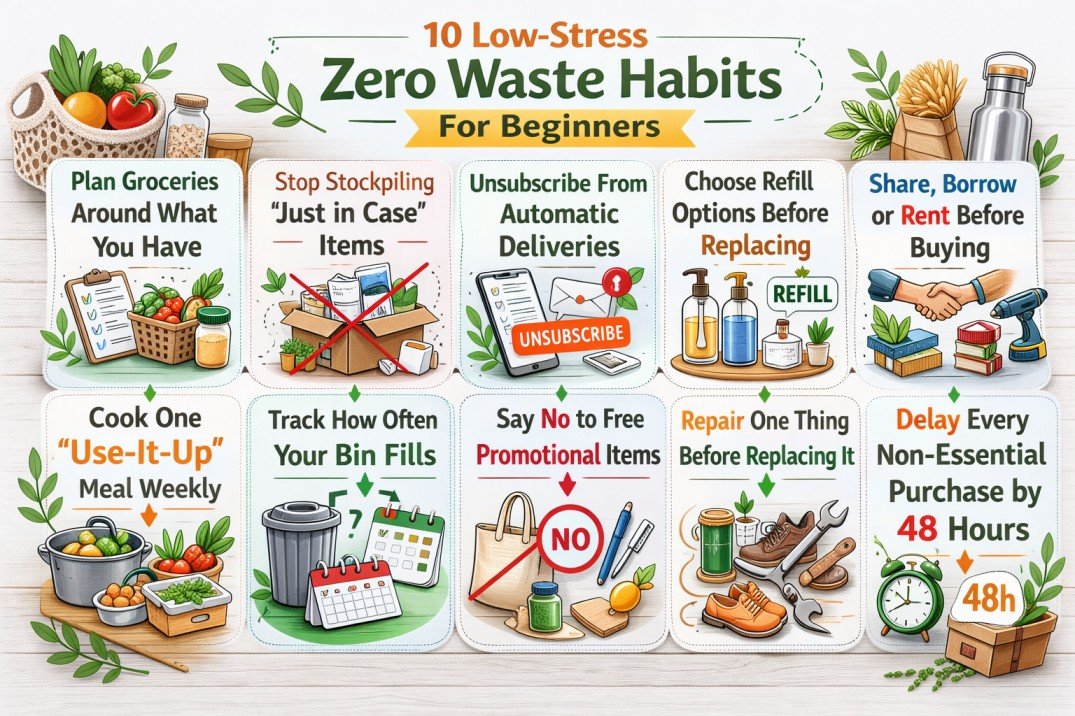
10 Low-Stress Zero Waste Habits That Fit Into Daily Life
You don’t need to implement everything at once. Start with one or two habits that feel easiest, then build gradually.
1. Carry One Reusable Essential
What to do:
Start with just one reusable item, either a water bottle or a shopping bag.
Why it matters:
Single-use bottles and plastic bags are among the most common household waste items.
How to make it easy:
Keep it permanently in your bag or car so it becomes automatic.
2. Reduce Food Waste Before Anything Else
What to do:
Plan three meals per week instead of seven.
Why it matters:
Food waste is one of the largest categories in landfill data reported by the U.S. Environmental Protection Agency.
How to make it easy:
Create a visible “use first” section in your fridge for leftovers.
3. Replace Paper Towels Gradually
What to do:
Switch to reusable cloths for everyday spills.
Why it matters:
Paper products form a significant share of municipal waste streams.
How to make it easy:
Use old cotton T-shirts or towels before buying anything new.
4. Shop With Packaging in Mind
What to do:
Choose loose produce and larger packs with less plastic per unit.
Why it matters:
Plastic packaging is a major contributor to household waste worldwide, according to reports from the United Nations Environment Programme.
How to make it easy:
Start by changing just one grocery category, like fruits or snacks.
5. Use What You Already Own
What to do:
Finish current products before replacing them with eco alternatives.
Why it matters:
Throwing away usable items creates unnecessary waste and cost.
How to make it easy:
Keep a small list of items to switch only when they run out.
6. Try Composting If Practical
What to do:
Compost fruit and vegetable scraps.
Why it matters:
Organic waste in landfills contributes to methane emissions.
How to make it easy:
If you live in an apartment, check for local compost drop-off options.
7. Pause Before Buying Household Items
What to do:
Use a 48-hour rule before purchasing non-essential items.
Why it matters:
Overconsumption leads to future waste.
How to make it easy:
Ask: “Will I still use this in one year?”
8. Switch One Bathroom Product
What to do:
Try replacing one bottled product with a bar version.
Why it matters:
Personal care packaging builds up quietly over time.
How to make it easy:
Start with soap, the simplest transition.
9. Repair Before Replacing
What to do:
Mend clothes or fix small appliances where possible.
Why it matters:
Extending product life reduces demand for new manufacturing.
How to make it easy:
Learn one simple repair skill this month.
10. Track Your Progress Monthly
What to do:
Notice whether your bin fills more slowly over time.
Why it matters:
Behaviour change sticks when progress is visible.
How to make it easy:
Take a photo of your weekly rubbish for comparison.
What Not to Mistake as Zero Waste Practices as a Beginner
When you’re starting a zero waste lifestyle, it’s easy to assume you need to overhaul everything at once. In reality, some of the most common “zero waste” actions beginners take can create more stress than impact.
Here’s what to avoid confusing with real progress.
Throwing away usable items to “upgrade” to eco products
Zero waste means using what you already have fully before replacing it.
Buying every sustainable product at once
Overconsumption, even of eco items, still creates waste and demand.
Relying only on recycling
Prevention and reduction have a greater impact than recycling alone.
Trying to eliminate all waste immediately
Gradual changes are more sustainable than drastic overhauls.
Believing zero waste requires expensive tools
Most impactful changes involve behaviour, not purchases.
Feeling guilty over occasional waste
Consistency matters more than perfection.
Focusing on aesthetics instead of impact
Mason jars and matching containers are optional, not essential.
Ignoring food waste while focusing only on plastics
Food waste is one of the largest contributors to landfill volume.
A Simple 90-Day Zero Waste Roadmap for Beginners
You don’t need to change everything this week. Spacing changes over three months makes them easier to maintain.
Month 1: Awareness and Easy Wins
Focus on observing and reducing obvious waste.
- Do a 7-day waste check.
- Carry one reusable item (bag or bottle).
- Replace paper towels with cloth for everyday use.
- Plan at least 3 meals per week to reduce food waste.
- Create a visible “use first” shelf in your fridge.
Goal: Notice patterns and reduce daily single-use items.
Month 2: Smarter Shopping Habits
Now adjust how items enter your home.
- Choose loose produce when available.
- Buy larger packs with less packaging per unit.
- Avoid impulse household purchases.
- Use what you already own before replacing it.
- Start a small compost system if practical.
Goal: Reduce packaging and food waste at the source.
Month 3: Long-Term Habit Building
Deepen changes without adding pressure.
- Switch one bathroom product to a bar or refill format.
- Repair one item instead of replacing it.
- Track how quickly your bin fills compared to Month 1.
- Review your top waste category and improve it further.
Goal: Turn small actions into lasting routines.
FAQs About Starting a Zero Waste Lifestyle
How do I start a zero waste lifestyle as a beginner?
To start a zero waste lifestyle, begin by noticing what you throw away most at home. Track your waste for a week, identify your top category, and reduce that first. Small, focused changes, like planning meals or carrying a reusable bag, are easier to maintain than trying to change everything at once.
What are the 5 steps of a zero waste lifestyle?
The five steps of a zero waste lifestyle are Refuse, Reduce, Reuse, Recycle, and Rot. You first refuse what you don’t need, then reduce what you do need, reuse items as long as possible, recycle correctly, and compost organic waste. The order matters because prevention has the biggest impact.
Is a zero waste lifestyle expensive to maintain?
No, a zero waste lifestyle is usually not expensive. In many cases, it saves money because you buy fewer disposable items and avoid impulse purchases. Most beginner changes involve using what you already own more efficiently rather than buying new eco products.
Can I practise zero waste living in a small apartment?
Yes, you can practise zero waste living in a small apartment. Even without composting space, you can reduce packaging waste, plan meals carefully, and use reusable containers. Focusing on shopping habits and food waste can significantly lower your household rubbish.
How long does it take to reduce household waste?
Most people start seeing noticeable changes in their weekly rubbish within one to three months. The key is consistency. When small habits become routine, the amount of waste you generate gradually decreases over time.
Do I need to buy special zero waste products to get started?
No, you do not need special zero waste products to begin. The most effective first step is finishing what you already have and reducing unnecessary purchases. Replacing items only when they run out prevents extra waste and keeps the process practical.