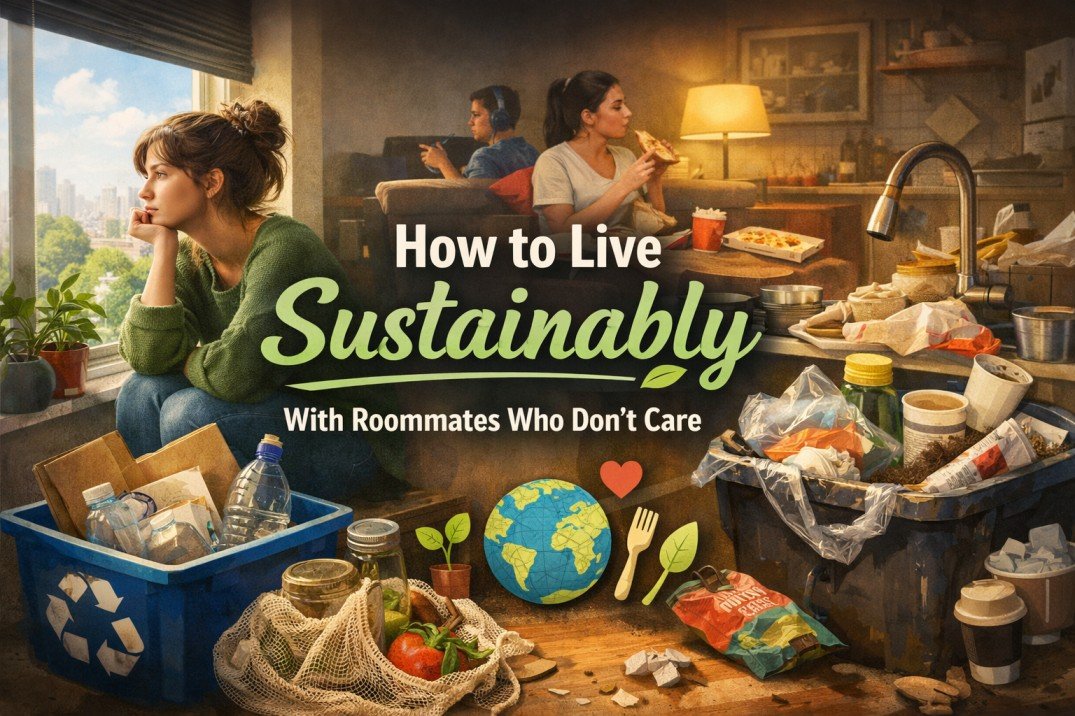
If you care about the planet but your roommates don’t, home can feel frustrating. You rinse cans and sort recycling, but someone throws trash into the bin anyway. The lights stay on all night. Takeout boxes pile up in the kitchen. You want to do better, but you don’t want fights or awkward talks.
If you’re in your 20s in the US, living with roommates is normal. Rent is high, space is shared, and everyone has different habits. The good news is you can still live in a greener way, even if you’re the only one trying. You don’t need a perfect home to make a real difference. Small choices in your own room and daily routine can add up over time.
This guide will show you simple, low-stress ways to be more eco-friendly without nagging anyone or making life harder. You can protect the planet and keep the peace at the same time.
Why This Happens So Often in Your 20s
Living with roommates means living with different habits. Not everyone grew up the same way. Some people never learned about recycling or saving energy. Others are busy, stressed, or just focused on getting through the day. Convenience often wins over long-term thinking.
In the US, many people in their 20s rent small apartments or shared houses because housing is expensive. When you don’t own the place, it can feel less important to take care of it. Utility bills are usually split, so one person using more electricity or water does not feel like a big deal to them.
People also care about different things. You might worry about plastic waste or climate change, while your roommates care more about saving time or money. That does not make them bad people. It just means your priorities are different.
The important thing to remember is this: you are not doing sustainability “wrong” just because others around you are not trying. This situation is very common, and you can still make meaningful changes on your own.
Start With What You Fully Control
You cannot control what your roommates do, but you can control your own space and habits. This is the easiest way to live more sustainably without stress or arguments.
Think of your room as your personal eco-zone. Even small changes there can make a big difference over time.
Turn Your Room Into a Mini Eco-Friendly Space
Start with simple swaps that only affect you:
- Use a reusable water bottle instead of plastic ones
- Keep a small recycling bin in your room
- Switch to LED bulbs or turn off lights when you leave
- Use a fan or natural light when possible
- Buy second-hand furniture or décor
Your room can become a calm, low-waste space even if the rest of the apartment is not.
Make Your Daily Habits Low-Impact
Your routines matter more than you think. Small actions done every day add up.
- Wash clothes in cold water
- Air-dry clothes when you can
- Take shorter showers
- Unplug chargers when not in use
- Turn off devices instead of leaving them on standby
These habits save energy, water, and money and they do not require anyone else to change.
When you focus on what you control, you stop feeling stuck. You begin to see progress, even in a shared home where others are not trying.
Reduce Waste Without Changing Anyone Else
You do not have to fix the whole household to reduce waste. You can lower your own trash in simple ways that do not depend on your roommates at all.
Create Your Own Recycling System
If the shared recycling bin gets mixed with trash, keep a small one in your room.
- Use a box or bin for paper, cans, and bottles
- Rinse items in your bathroom sink if needed
- Empty it into the building’s recycling area yourself
- Take it out regularly so it does not smell
This way, your effort does not get undone by someone else.
Keep Personal Reusables Separate
Shared kitchens often lead to lost or damaged items. Keep your reusables in your own space.
- Your own water bottle
- Reusable coffee cup
- Cloth shopping bags
- Food containers for leftovers
- Metal straw or reusable utensils
Store them in your room so they are always clean and ready when you need them.
Shop in Ways That Create Less Trash
What you bring home matters more than what happens later.
- Choose products with less packaging
- Buy larger sizes instead of many small ones
- Pick loose fruits and vegetables when possible
- Avoid single-use items
Even if others create waste, you are not adding to it.
Build Low-Waste Food Habits
Food waste is a big part of household trash, but you can manage your own.
- Plan simple meals you will actually eat
- Freeze leftovers before they spoil
- Use reusable containers instead of plastic wrap
- Eat perishable foods first
These habits save money and reduce guilt when food does not get eaten.
You may not control the shared trash can, but you absolutely control what goes into it from your side. Over time, that still makes a real impact.
For local recycling rules and what can be recycled in your area, check the EPA recycling guide.
Sneaky Ways to Make the Whole Apartment Greener
You do not always need a big conversation to improve things. Small changes that make life easier or cheaper for everyone are more likely to stick.
Switch to Energy-Saving Lighting
If a bulb burns out, replace it with an LED bulb.
- LEDs use much less electricity
- They last for years
- No one has to change their habits
- The apartment looks the same, just more efficient
Most roommates will not even notice, except on the power bill.
Use Smart Power Strips
Many devices use electricity even when turned off. A smart power strip cuts that waste automatically.
- Great for TV areas, gaming setups, or desks
- No daily effort needed
- Reduces “phantom” energy use
- Can lower shared utility costs
It helps the planet and saves money, which everyone likes.
Block Drafts and Save Heating or Cooling
Heating and air conditioning use a lot of energy in US homes.
- Use draft stoppers under doors
- Close curtains to keep heat out or in
- Seal small gaps around windows if allowed
- Keep doors closed in unused rooms
These changes make the home more comfortable too.
Suggest Bulk or Shared Supplies
Frame this as saving money, not saving the planet.
- Large bottles of dish soap
- Big packs of paper products
- Shared cleaning supplies
- Refillable hand soap
Buying fewer, larger items means less packaging and fewer store trips.
Try Low-Effort Compost Options (If Available)
Some US cities and apartments offer compost pickup.
- A small sealed bin prevents smells
- Compostable bags make cleanup easy
- Food scraps stay out of landfill
If it feels too complicated, skip it. Sustainability should not make your life harder.
These “quiet upgrades” work because they do not rely on changing people’s beliefs. They simply make the default choice a better one.
How to Talk About Sustainability Without Sounding Preachy
Sometimes a small conversation can help, but the way you say things matters more than what you say. Most people resist feeling judged, even if that is not your intention.
Keep it casual, short, and focused on shared benefits.
Lead With Money or Convenience
Saving money is something almost everyone cares about.
You could say:
- “Our electricity bill was high last month. I’m trying to cut back a bit.”
- “LED bulbs use less power, so I switched a few.”
- “Buying the bigger pack was cheaper per use.”
This makes it about the household, not about who is “right.”
Make It About Your Choice, Not Their Behavior
Use “I” statements instead of “you” statements.
Better approach:
- “I’m trying to reduce my plastic use.”
- “I started recycling more, so I put a bin in my room.”
- “I’m bringing my own containers to cut waste.”
This removes pressure from them to change.
Offer, Don’t Force
If you buy something reusable, simply make it available.
- Reusable paper towels
- Extra cloth bags
- Refillable soap
- A labeled recycling box
Say something like, “Feel free to use this if you want.” Then leave it alone.
Pick Your Moments Carefully
Avoid bringing it up when people are stressed, busy, or defensive.
Better times:
- During normal conversation
- When discussing bills or groceries
- When replacing household items anyway
Short, calm mentions work better than serious talks.
Most important: if they are not interested, do not push. Protecting peace at home is part of protecting your well-being too.
You can live by your values without turning every day into a debate.
When It’s Not Worth Fighting Over
Not every problem needs a solution, and not every habit is worth a conflict. Living with roommates means choosing your battles wisely.
If you argue about every light left on or every plastic container, home will start to feel tense instead of safe.
Ask yourself:
- Is this affecting my daily life in a big way?
- Can I solve it on my own?
- Will bringing it up improve things or just create stress?
If the answer is mostly stress, it may be better to let it go.
You Cannot Control Other Adults
Your roommates have their own habits, priorities, and beliefs. Trying to change them usually leads to frustration for everyone.
Focus on what you can control:
- Your purchases
- Your routines
- Your personal space
- Your reactions
Accepting limits does not mean you do not care. It means you are being realistic.
Protect Your Relationships at Home
Even temporary roommates are people you share daily life with. Constant tension can make simple things like cooking or relaxing uncomfortable.
Peaceful coexistence is valuable. A calm home supports your sleep, work, and mental health.
Focus on High-Impact Changes Instead
Some actions matter much more than others.
High-impact choices you control:
- Eating less food waste
- Using reusable items daily
- Reducing energy use in your own space
- Buying fewer disposable products
You do not need to win every small battle to make a real difference.
Sometimes the most sustainable choice for your well-being is accepting that perfection is impossible in shared living. Progress still counts, even if it is not visible in every corner of the apartment.
Protecting Your Mental Health and Avoiding Eco-Burnout
Caring about the planet when your roommates don’t can feel heavy and lonely, especially when you see waste every day and feel like you are the only one trying. You might feel annoyed, guilty, or tired, but you should not carry all that stress by yourself. Your effort still matters, even if no one else changes.
- You are not responsible for other people’s choices
- Your small actions still count
- Progress is more important than perfection
- It is okay to take breaks from eco stress
- Do things that calm you, like going outside or seeing friends
- Limit negative news if it makes you feel overwhelmed
- Find support from people who care about the same things
Taking care of your mental health is part of living sustainably too. A calm, hopeful person can make a bigger difference over time than someone who feels burned out and discouraged.
If Sustainable Living Is a Dealbreaker, Plan Ahead for Your Next Move
Sometimes the problem is not just habits, it is a mismatch in values. If living sustainably is very important to you, sharing a home with people who do not care can feel draining over time. You may not be able to change your current situation right away, but you can plan for a better one in the future.
- Look for roommates who share similar habits or goals
- Ask simple questions before moving in, like recycling or energy use
- Check if the building has recycling or compost options
- Consider smaller households with fewer people
- Explore eco-friendly housing groups or listings
- Budget early so you have more choices next time
Even small steps now can lead to a living space that feels more aligned with your values later. You deserve a home where you do not feel stressed about everyday choices.
The Truth: You’re Still Making a Difference
It may not feel like it when you see overflowing trash bags or lights left on all night, but your choices still matter. Living sustainably is not about being perfect or controlling everyone around you. It is about doing what you can, where you are.
- Every reusable item replaces many single-use ones
- Saving energy in your room still reduces overall use
- Your habits build skills for the future
- Small changes add up over months and years
- You may quietly influence others without realizing it
- You are helping more than you think
Even if no one thanks you or joins you, your effort is not wasted. The goal is progress, not perfection. By caring and taking action, you are already part of the solution, and that matters more than any single household’s habits. 🌿