If you live in a cold U.S. state, winter can make composting feel impossible. Your outdoor bin may be frozen solid, buried in snow, or too far to walk to in icy weather. But your kitchen doesn’t stop making food scraps. Banana peels, vegetable skins, eggshells, and leftovers keep piling up every day.
Throwing them in the trash can feel wasteful, especially if you want to live more sustainably.
The good news is that you don’t have to stop composting just because it’s cold outside. You can compost indoors during winter, even if you live in a small apartment and don’t have a yard.
When done the right way, indoor composting can be clean, simple, and free from bad smells or bugs.
In this guide, you’ll learn easy ways to handle food scraps inside your home until spring arrives. You’ll also see which options work best for busy households, small spaces, and freezing climates, so you can choose what feels right for you.
The Quick Answer: Yes, You Can Compost Indoors in Winter
Yes, you can compost inside your home during winter. Cold weather outside does not matter because indoor composting happens at room temperature. You do not need a backyard, and you do not have to go out in the snow.
Many people in cold states use simple indoor methods to handle food scraps all winter long. When done properly, these methods do not smell bad and do not attract bugs.
You can choose what fits your home and comfort level. Some options work fast and need very little effort, while others are simple ways to store scraps until warm weather comes back. The key is using a clean, closed system and emptying it regularly.
So even when the ground is frozen solid outside, you still have easy ways to keep food waste out of the trash.
Why Outdoor Composting Stops Working in Freezing Weather
In very cold weather, compost piles outside slow down or stop working. The tiny living things that break down food scraps need warmth to stay active. When temperatures drop below freezing, they become inactive, and the pile can turn hard like ice.
Snow can also make it hard to reach your compost bin. Lids may freeze shut, paths get slippery, and going outside in the dark or cold is uncomfortable. Because of this, many people simply stop using their outdoor compost during winter.
But your food scraps do not stop. You still cook, eat, and clean your kitchen every day. That is why indoor solutions become so helpful during the cold months.
If you’re trying to reduce household waste overall, indoor composting is one of the easiest steps toward a more zero-waste lifestyle.
The Best Indoor Composting Solutions for Cold Climates
You have several easy options for handling food scraps inside your home during winter. The best choice depends on your space, budget, and how much effort you want to put in. All of these methods can work safely indoors when used correctly.
Electric Kitchen Composters
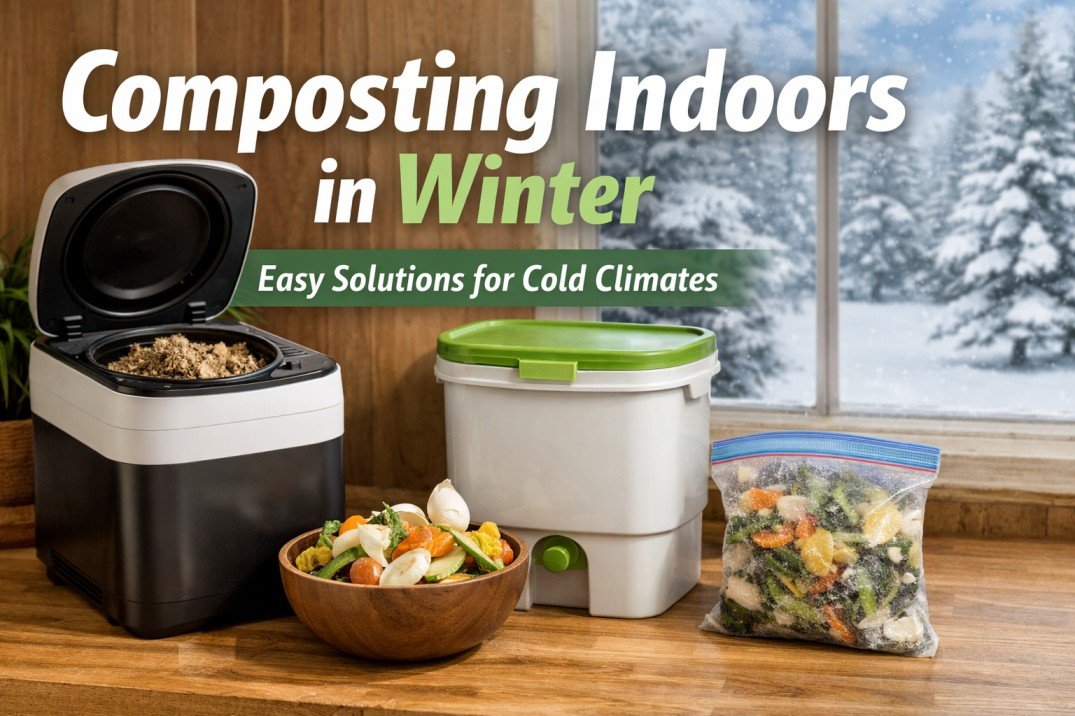
These are small machines that sit on your counter. You put food scraps inside, press a button, and the machine dries and breaks them down into a soil-like material.
- Fast and very easy to use
- No worms or special skills needed
- Little to no smell
- Good for busy homes
The main downside is the higher cost, but many people like the convenience.
Bokashi Systems
A Bokashi bin is a sealed bucket that uses special microbes to break down food scraps. You add waste, sprinkle the mix, and close the lid tightly.
- Compact and good for apartments
- Low odor because it stays sealed
- Can handle leftovers and cooked food
- Needs to be emptied later when outdoor composting is possible
Freezer Storage Method
This is the simplest option of all. You place food scraps in a sealed container or bag and store them in the freezer.
- No smell at all
- No bugs
- No setup or maintenance
- Very budget-friendly
When spring comes, you can move the frozen scraps to an outdoor compost pile or a community compost program.
Combining Methods for Convenience
Many households use more than one method. For example, you might use a machine for daily scraps and the freezer for extra waste after big meals. This makes it easier to handle changing amounts of food waste without stress.
Each option can keep your kitchen cleaner and reduce how much trash you throw away during winter.
How to Choose the Right Option for Your Home
The best method is the one that fits your daily life. You do not need the “perfect” system, just something you will actually use.
If you live in a small apartment, a compact or sealed option usually works best. Electric machines or closed buckets take up little space and keep everything contained.
If you have a busy schedule, choose something low-effort. Methods that do not need daily care or checking are easier to stick with when life gets hectic.
If you want to spend very little money, simple storage methods can work just fine. You can still keep scraps out of the trash without buying special equipment.
If your goal is to make usable compost for plants later, pick a method that turns waste into a soil-like material or something you can add to an outdoor pile when the weather warms up.
Most importantly, choose a system that feels clean, easy, and comfortable for you. When it fits your home and routine, indoor composting becomes just another small habit, not a chore.
How to Keep Indoor Composting Clean and Odor-Free
Indoor composting should not make your home smell bad. If done properly, you may not even notice it most of the time.
The most important step is to keep food scraps in a closed container or system. Open bowls of waste can smell and attract bugs, but sealed containers keep everything contained.
Try not to let scraps sit out for too long. Add them to your compost system regularly, especially after cooking or cleaning up meals. This prevents buildup and reduces odors.
Too much liquid can also cause problems. Very wet waste may start to smell, so drain excess liquids before adding scraps when possible.
It also helps to empty or process your system on schedule. When containers get too full, odors are more likely to develop.
When managed this way, indoor composting should smell mild or earthy, not like rotting garbage. Many people find their kitchen trash smells less once they stop throwing food scraps into it.
What to Do With the Material When Warmer Weather Returns
When spring arrives and the ground starts to thaw, you can move your indoor compost material outside. This is when it becomes useful for your garden and plants.
You can add it to an outdoor compost pile or bin to finish breaking down naturally. Warmer temperatures help speed up the process again.
If you have a garden, you can mix the material into the soil to improve its quality. It can help plants grow by adding nutrients and improving soil texture.
For homes without a garden, many areas offer community compost programs. You can drop off your stored material so it can be processed properly instead of going to a landfill.
Some people also use small amounts for houseplants, depending on the method used and how processed the material is.
Spring is the time when all your winter effort pays off, turning months of saved food scraps into something useful instead of waste.
Is Indoor Composting Worth the Effort?
For many households, indoor composting during winter is worth it. It can greatly reduce how much food waste goes into your trash, which often means fewer garbage bags and less smell in the kitchen.
It also saves you from going outside in freezing weather just to dump scraps. Everything stays convenient and close by.
If you garden, you get a helpful material ready to use when planting season begins. Even if you do not garden, keeping food waste out of landfills is a meaningful step toward a more sustainable home.
The effort depends on the method you choose. Some options need almost no work, while others require a little routine. Most people find that once they get used to it, indoor composting becomes just another simple kitchen habit.
Overall, it is a practical way to manage food waste during the cold months without mess or discomfort.
Conclusion
Cold weather may stop outdoor composting, but it does not stop your ability to reduce food waste. With the right indoor method, you can handle kitchen scraps safely and comfortably all winter long.
You do not need a yard, special skills, or a lot of space. Even small homes and apartments can manage food waste in a clean and simple way. The key is choosing an option that fits your routine and feels easy to maintain.
By the time warmer weather returns, you will have kept months of waste out of the trash and turned it into something useful. Small daily actions like this can make a real difference over time.
Winter does not have to pause your sustainable habits. With a little planning, composting can continue all year.