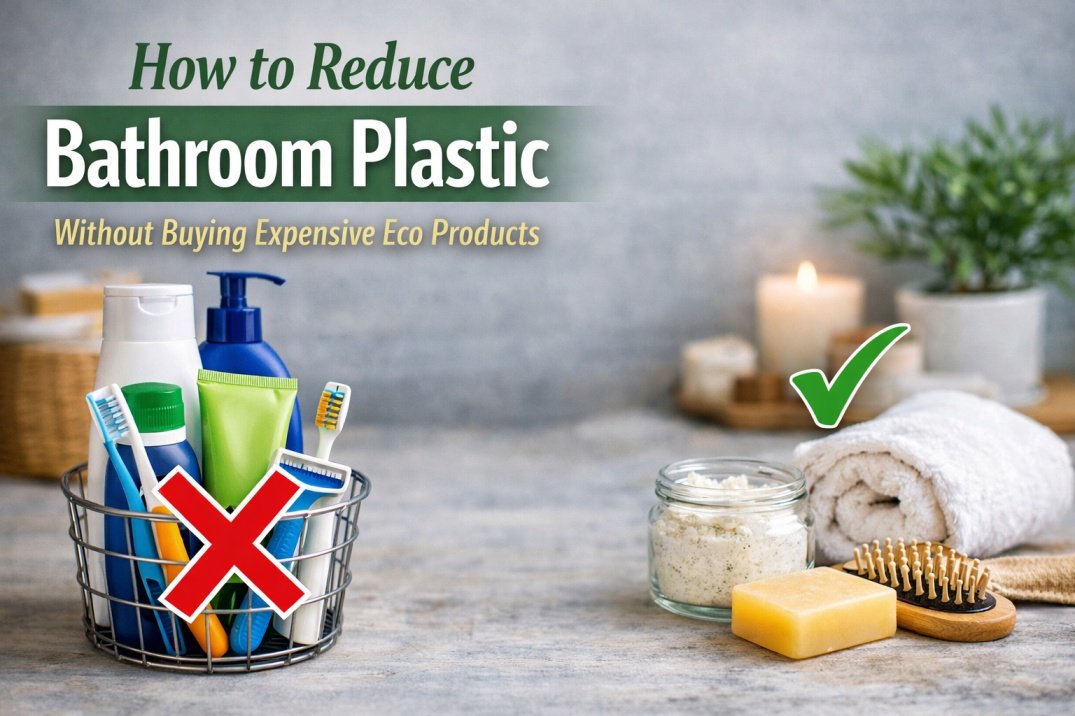
Most bathroom products in the United States come in plastic. Shampoo bottles, toothpaste tubes, and body wash packs are used every day. This creates steady plastic waste in most homes.
Many people think reducing bathroom plastic is expensive. Eco-friendly products often cost more than regular brands. This makes change feel difficult.
You do not need to buy new or costly products. You can reduce bathroom plastic by using what you already have more carefully. Small changes can lower waste without increasing your budget.
Bathroom plastic builds up because items are replaced often. Most products run out in a few weeks. This leads to repeated plastic use over time.
Reducing plastic in the bathroom is about simple habits. It is not about creating a perfect zero waste home. Even small reductions support sustainable living and lower overall waste.
Why Bathroom Plastic Builds Up So Fast
Bathroom plastic builds up because products are used every day. Items like shampoo, toothpaste, and body wash run out quickly. This leads to frequent repurchasing.
Most bathroom products come in single-use plastic packaging. Bottles, pumps, and tubes are designed for short-term use. They are replaced again and again.
Many of these items are hard to recycle in the United States. Toothpaste tubes and pump bottles often cannot go in regular recycling bins. This increases landfill waste.
People usually do not track bathroom waste. Small items feel insignificant on their own. But together, they create a large amount of plastic over time.
This is why bathroom plastic increases without notice. It is not one big purchase. It is repeated daily use that adds up.
Common Bathroom Items That Create the Most Plastic
Shampoo and conditioner bottles are the biggest source of bathroom plastic. Most people replace them many times a year. These bottles are rarely reused.
Body wash and face wash also come in plastic bottles. These are used daily and run out quickly. This creates repeated plastic waste.
Toothpaste tubes add constant small waste. Most tubes are made of mixed materials. They are difficult to recycle in the United States.
Disposable razors and refill cartridges create hidden plastic waste. They are replaced often and not reused. This adds to long-term waste.
Skincare products also come in plastic containers. Creams, lotions, and serums use pumps and bottles. Many of these are thrown away after use.
These items feel small individually. But together, they create a large amount of plastic. Most people do not notice how fast it builds up.
Simple Ways to Reduce Bathroom Plastic Without Spending More
Use What You Have for Longer
Most people replace products before they are fully finished. Shampoo, toothpaste, and creams often have product left inside. Using them completely reduces how often you buy new plastic.
Cut open tubes or turn bottles upside down to finish them. This simple habit reduces waste without buying anything new. It also saves money.
Choose Bigger Packs Instead of Small Ones
Smaller bottles create more plastic per use. Travel sizes and mini packs run out quickly. This increases how often you throw plastic away.
If you already buy the same product, choose a larger size. One big bottle usually creates less plastic than many small ones. This is an easy switch that does not change your routine.
Skip Unnecessary Bathroom Products
Many bathrooms have extra items that are not essential. Multiple face washes, scrubs, or speciality products add more plastic. These are often used less but still create waste.
Stick to basic products you actually use daily. Fewer products mean fewer plastic containers. This keeps your routine simple and reduces waste.
Avoid Single-Use Items
Items like disposable razors, wipes, and cotton pads create constant plastic waste. They are used once and thrown away. This adds up quickly.
If you already use them, try to reduce how often you buy them. Even small reduction helps. You do not need to replace everything at once.
Reuse Containers at Home
Empty bottles and containers can be reused in simple ways. You can use them for storage, travel, or refilling from bigger packs. This extends their life.
Most people throw them away immediately. Keeping a few useful ones reduces new plastic use. It is a practical habit that fits daily life.
Share and Combine Products in the Household
Many households use separate products for each person. This creates duplicate plastic waste. For example, multiple shampoos or body washes.
Using shared products reduces the number of bottles used. This is common in many homes and works without extra effort. It lowers plastic without changing what you buy.
Buy Less Often, Not Differently
You do not need to switch to expensive eco brands. Just reduce how often you buy new items. This lowers the total plastic entering your home.
Even delaying a purchase by a few days or weeks helps. Less buying means less plastic. This is simple and realistic for most people.
What You Don’t Need to Buy (Save Your Money)
You do not need to replace everything with eco-friendly products. Many “zero waste” items are expensive and not necessary. Reducing plastic is more about how you use products, not what you buy.
You do not need full bathroom kits or trending sustainable products. Bamboo brushes, glass containers, and refill systems can be useful, but they are not required. Buying too many new items can create more waste.
Avoid switching products too quickly. Throwing away half-used items just to buy eco versions increases waste. It is better to finish what you already have first.
You also do not need a perfect zero waste bathroom. That idea can feel overwhelming and unrealistic. A low-plastic routine is more practical and easier to maintain.
Focus on simple habits instead of new purchases. Use products fully, buy less often, and avoid extra items. These steps reduce plastic without increasing your budget.
Is a Low-Plastic Bathroom Really Possible on a Budget?
Yes, a low-plastic bathroom is possible on a budget. It starts with using products fully and buying less often. These habits reduce plastic without extra cost.
A zero waste home does not require expensive eco products. It focuses on reducing waste step by step. Simple changes are enough to make progress.
Most plastic reduction comes from daily habits. Finishing products, avoiding extras, and reusing containers lowers waste. These actions work without changing your lifestyle.
It is not about removing all plastic at once. That is not realistic for most homes. Reducing even part of your plastic makes a real difference.
Sustainable living works best when it feels easy. Small, consistent changes are more effective than big, expensive shifts. This makes long-term habits easier to follow.
FAQ: Reducing Bathroom Plastic on a Budget
How to reduce plastic in the bathroom cheaply?
Reduce plastic in the bathroom cheaply by using products fully and buying fewer items. Choose larger packs instead of small ones. Reuse containers and avoid unnecessary products.
What are the biggest plastic items in bathrooms?
The biggest plastic items in bathrooms are shampoo bottles, body wash containers, and toothpaste tubes. These are used daily and replaced often. They create the most regular plastic waste.
Can I reduce bathroom waste without eco products?
You can reduce bathroom waste without eco products by changing simple habits. Use what you already have and avoid extra purchases. Small changes reduce plastic without spending more.
Is a zero waste bathroom expensive?
A zero waste bathroom can be expensive if you replace everything at once. But it is not required to spend money to reduce plastic. A low-plastic approach works better for most people.
What is the easiest way to start reducing bathroom plastic?
The easiest way to start reducing bathroom plastic is to finish products fully and avoid buying extras. Reducing how often you buy new items helps. Simple habits make the biggest difference.