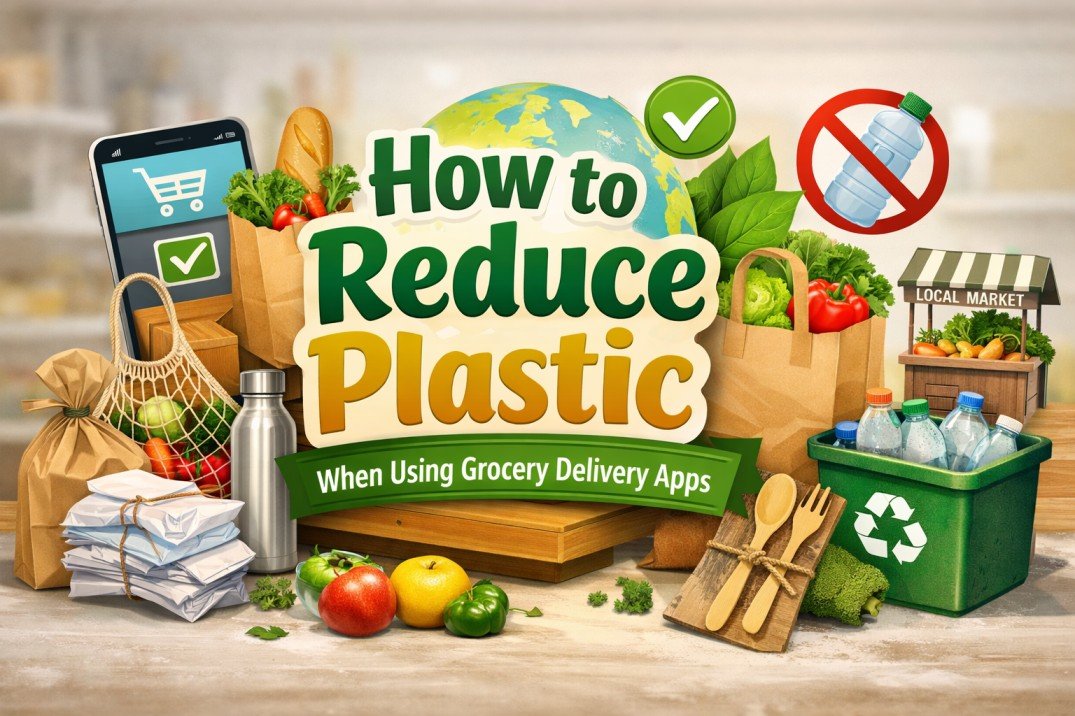
If you order groceries online, you bring home more plastic than you think. Each delivery comes with plastic bags, wraps, and packs. This plastic adds up fast.
Many people get 80 to 150 plastic items in one month from grocery delivery. Most people do not notice it at first. It builds slowly with each order.
You are not doing anything wrong. You are just busy and want easy options. Grocery apps make daily life simple.
But there is a hidden problem. Each order adds more plastic to your home. Over time, it becomes a lot.
The good news is this. You do not need to stop using delivery apps. You can make small changes.
In this guide, you will learn simple ways to reduce plastic. These steps are easy to follow. You can start today without stress.
Why Grocery Delivery Creates More Plastic Than You Think
Grocery delivery uses more plastic than store shopping. Each order is packed fast for safety. This means extra bags and wraps are used.
It is not just plastic bags. Items come in trays, covers, and small packets. Many products are packed again for delivery.
Each order starts a new packing process. Nothing is reused from your last order. So plastic keeps increasing every time.
Cold items need more protection. They come with extra plastic covers and insulation. This adds even more waste.
One small order can have many plastic pieces. A single delivery can include 10 to 25 plastic items. Most people do not notice this.
This is why plastic builds up quickly. It is not one big mistake. It is many small deliveries over time.
How Much Plastic You’re Actually Bringing Home Each Month
Plastic from grocery delivery adds up faster than you think. Each order brings many small plastic items. These items collect over time.
If you order two times a month, you may get 20 to 30 plastic bags. You may also get 40 to 70 plastic items. This is still a lot for light users.
If you order once every week, the number grows fast. You may get 40 to 80 plastic bags in a month. Total plastic items can reach 80 to 150.
Heavy users get even more plastic. People who order many times a week may get 100 to 200 plastic bags. Total plastic items can go up to 200 to 400.
Small orders create more waste. Each order needs new packing and new bags. This makes frequent orders less efficient.
This is why it feels like plastic never stops. It is not one big delivery. It is many small ones adding up.
The Most Common Grocery Delivery Apps (And Their Hidden Plastic Problem)
Many people use grocery delivery apps every week. These apps make shopping fast and easy. But they also increase plastic use.
Popular apps include Instacart, Amazon Fresh, and Walmart. Some people also use Shipt. Each app packs orders in its own way.
Apps that shop from many stores use more packaging. Items come from different places. So they are packed again and again.
Big stores often use many plastic bags. Bulk orders still come in separate bags. This adds more plastic than expected.
Cold and fragile items need extra care. They are wrapped in more plastic layers. This increases total waste.
Most people do not see this process. They only see the final delivery. But a lot of plastic is used before it reaches you.
How to Reduce Plastic When You Rely on Grocery Delivery Apps
Combine Orders and Shop Once
Try to place one proper order instead of many small ones. In the US, even a small order from apps like Instacart or Walmart comes with multiple plastic bags. The system does not reduce packaging for smaller orders.
If you order once a week instead of 2–3 times, you automatically cut plastic. You don’t need perfect planning, just add a few extra items you already use. This is one of the easiest changes that actually works.
Use Notes to Ask for Less Plastic
Most US grocery apps allow a “delivery note” or “shopper note.” You can write simple lines like “please use fewer plastic bags” or “combine items if safe.” Some shoppers follow this, especially for dry goods.
It won’t work every time because stores have packing rules. But even partial success reduces a few extra bags per order. Over a month, this adds up more than you expect.
Choose Retailers With Better Packaging Options
Different retailers in the US pack differently. Amazon Fresh may use insulated packaging, while some local stores use paper bags or fewer layers. The choice of store changes your plastic footprint.
When you have options, try stores that use simpler packaging. You don’t need to switch everything, just try it once and compare. Small shifts here make a real difference.
Reuse What You Receive at Home
You will still get plastic bags and wraps. Instead of throwing them away, reuse them naturally in daily life. Most US households already reuse grocery bags for trash or storage.
Keep them in one place so they don’t pile up randomly. This makes reuse easy without effort. It doesn’t reduce incoming plastic, but it reduces waste going out.
Avoid Too Many Deliveries in a Week
Frequent ordering is very common in the US. But each delivery restarts the full packaging process. Even a 2-item order comes with multiple bags.
If possible, reduce how often you order. Even going from 3 orders to 1–2 per week lowers plastic a lot. This works better than trying to control packing.
Support Local Stores When Available
Local grocery stores or small markets often use simpler packing. They may use paper bags or fewer plastic layers compared to large chains. This depends on your area, but it’s worth trying.
When ordering through apps, choose nearby or smaller stores when possible. You may notice less overpacking. It’s a small change that feels natural.
Recycle “Good” Plastics the Right Way
Not all plastic from delivery can go in your home recycling bin. In the US, soft plastics like grocery bags are usually recycled at store drop-off points. Many stores accept them.
Keep clean and dry plastic bags separately. Drop them off during your next visit to a store. This helps reduce landfill waste without extra effort.
You don’t need to control everything. Grocery delivery in the US is built around convenience, and some plastic is unavoidable. Trying to remove all of it only makes things harder.
But if you:
- order a little less often
- avoid a few high-plastic items
- reuse and recycle what you get
you already reduce a meaningful amount over time.
Is Grocery Delivery Still Worth It If You Care About the Environment?
Grocery delivery is still worth it for sustainable living. It saves time and can reduce travel emissions. But it usually creates more plastic packaging than in-store shopping.
A zero waste home does not require stopping grocery delivery. It focuses on reducing waste where possible. Using delivery with fewer orders and simpler items lowers overall plastic.
The best approach is balance, not perfection. Grocery delivery can fit into a sustainable living routine with small changes. Reducing even part of your plastic use makes a measurable impact.
FAQ: Reducing Plastic in Grocery Delivery
How to reduce plastic when ordering groceries online?
Reduce plastic when ordering groceries online by placing fewer, larger orders and avoiding highly packaged items. Choose simple products like whole fruits and basic staples. Reuse and recycle the plastic that comes with your delivery.
Why does grocery delivery use so much plastic?
Grocery delivery uses more plastic because items are packed for safety, speed, and transport. Each order needs separate bags and protective wrapping. This leads to more packaging than in-store shopping.
Can you request no plastic bags on grocery apps?
You can request fewer plastic bags using delivery notes on most grocery apps. Some shoppers may follow these instructions when possible. However, store policies and item safety often limit how much plastic can be reduced.
Is grocery delivery worse for the environment?
Grocery delivery can create more plastic waste than in-store shopping. But it may reduce fuel use and travel emissions. Its environmental impact depends on how often you order and what you buy.
Which grocery delivery app uses less packaging?
No grocery delivery app fully avoids plastic packaging. Some retailers use simpler or paper-based packing depending on location. Choosing stores with minimal packaging options can help reduce overall waste.
Learn more from Environmental Protection Agency: https://www.epa.gov/recycle/reducing-waste-what-you-can-do