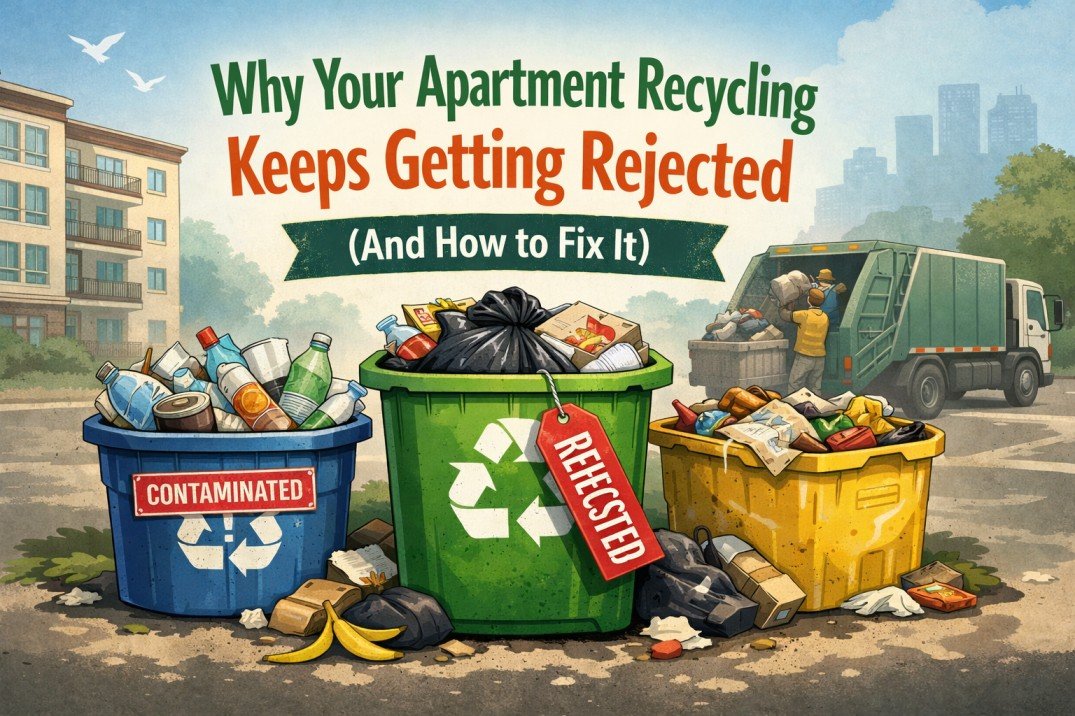
If you live in an apartment, you may try hard to recycle. You rinse bottles, flatten boxes, and carry everything to the recycling bin. So it can feel confusing and frustrating when the bin is tagged, left uncollected, or emptied into the trash truck anyway. It makes you wonder if your effort even matters.
The truth is, apartment recycling is different from recycling in a single house. Many people share the same bins, and one mistake can affect everyone. Even small things like a greasy pizza box or a plastic bag can cause an entire load to be rejected.
In this guide, you’ll learn why this happens, what might be going wrong, and what you can do to improve your chances. If you want less trash overall, learning to recycle properly is an important part of creating a zero-waste home.
You’re Trying to Recycle, So Why Isn’t It Working?
It can feel unfair. You sort your waste carefully, but the recycling still gets rejected. The problem is that recycling systems are very strict. They are designed to process clean, specific materials, not mixed or dirty waste.
In apartment buildings, many people use the same bins. That means your effort depends on everyone else’s behavior too. If even a few people put the wrong items inside, the whole container can be marked as contaminated.
Recycling companies often do not have time to sort through messy bins by hand. If the load looks too risky or dirty, they may send it straight to the landfill instead. This is why recycling can fail even when you feel like you did everything right.
One Wrong Item Can Ruin the Whole Bin
Recycling works only when the materials are clean and sorted correctly. If the wrong item goes in, it can contaminate everything around it. Workers and machines cannot easily separate bad items from good ones once they are mixed together.
For example, a bag of regular trash, food waste, or liquids can spread across the bin and ruin paper, cardboard, and other recyclables. Even small things like a dirty container or a plastic bag can cause big problems during sorting.
Because of this risk, recycling trucks or facilities may reject the entire bin instead of trying to fix it. In apartment buildings, this means one person’s mistake can send everyone’s recycling to the landfill.
You May Be Putting the Wrong Things Inside
Many items look recyclable but actually are not accepted in most recycling programs. It is easy to make mistakes, especially because rules can be different in every city. What is allowed in one place may be rejected in another.
Dirty Containers Can Contaminate Everything
Food and liquid left inside containers can soak into paper and cardboard or spread to other items. A greasy pizza box or an unwashed yogurt cup can make clean materials unusable. Recycling facilities need items to be mostly clean so they can be processed safely.
Plastic Bags and Wrappers Don’t Belong There
Grocery bags, chip packets, and plastic film are a major problem. These soft plastics can wrap around sorting machines and cause shutdowns. Because of this, most curbside programs do not accept them in recycling bins.
Some Items Look Recyclable But Aren’t
Certain products are confusing because they contain mixed materials or special plastics. Common examples include foam containers, disposable coffee cups, black plastic trays, and some types of packaging. When in doubt, it is safer to leave them out than risk contaminating the bin.
Even If You Do Everything Right, Others Might Not
Apartment recycling is shared, which means your results depend on everyone who uses the bin. You can sort carefully every day, but one neighbor throwing in regular trash can undo your effort.
Shared Bins Mean Shared Mistakes
People have different habits, knowledge, and levels of concern about recycling. Some may be in a hurry, unsure of the rules, or simply not paying attention. When many households use the same container, mistakes add up quickly.
Overflow Leads to Trash Ending Up in Recycling
When bins are full, people often place bags on top or squeeze trash into any available space. This mixes garbage with recyclables and makes the entire load look contaminated. Once that happens, collection crews may reject the bin or send it to landfill instead.
This is why apartment recycling can fail even when you personally do everything correctly.
Signs Your Recycling May Be Going to Trash Instead
Sometimes it is not obvious that recycling has been rejected. But there are a few clear signs that your building’s recycling may not be processed the way you expect.
You might see warning stickers or tags placed on the bins. These often say the container is contaminated or not collected because of incorrect items inside.
Another sign is when recycling is picked up with regular trash, using the same truck compartment. This can happen if the load has already been rejected.
Bins that are always overflowing, messy, or full of garbage bags are also a warning sign. When recycling looks too contaminated, crews may decide it is not worth sorting.
If you notice these problems happening again and again, it usually means the system is breaking down — not just one small mistake.
What You Can Do to Improve Your Chances
You cannot control everyone in your building, but you can make sure your own recycling is as clean and correct as possible. Small habits can greatly reduce the risk of contamination.
Rinse Containers Quickly
You do not need to scrub everything perfectly. A quick rinse to remove food and liquids is usually enough. This keeps other recyclables clean and prevents bad smells.
Keep Plastic Bags Out
Empty recyclables loose into the bin instead of tying them in bags. If you have plastic bags or film, save them for store drop-off programs rather than putting them in apartment recycling.
Flatten Cardboard Boxes
Breaking down boxes saves space and prevents overflow. This makes it easier for everyone to use the bin properly and reduces the chance that trash will be thrown in when space runs out.
Follow Local Recycling Rules
Check your city or building guidelines if possible. Recycling programs accept different materials depending on local facilities. Knowing the rules helps you avoid common mistakes.
These simple steps cannot guarantee success, but they give your recycling the best chance of actually being recycled.
Recycling rules can vary by location, so it helps to check official guidance such as the U.S. Environmental Protection Agency recycling guidelines for what is accepted in your area.
When the Problem Isn’t You
Sometimes recycling fails even when you do everything correctly. In apartment buildings, many factors are outside your control.
If neighbors regularly throw trash into recycling, the bin can become contaminated no matter how careful you are. Poor signage, unclear rules, or lack of education can also lead to repeated mistakes by residents.
Building management plays a role too. If bins are too small, not emptied often enough, or placed in inconvenient locations, people may stop sorting properly. In some cases, collection services themselves have strict limits on what they accept.
Local recycling systems also vary widely. Some cities recycle many materials, while others accept only a few basic items. What feels recyclable may still be rejected simply because the facility cannot process it.
If this happens, it does not mean your effort is wasted. It just means the system around you needs improvement, not your intentions.
If Recycling Keeps Failing, Try These Better Options
If your building’s recycling system rarely works, you still have ways to keep waste out of landfills. Many people in apartments use these alternatives to make sure their efforts count.
Use Local Drop-Off Centers
Many cities have recycling centers where you can bring items directly. These locations often accept materials that apartment bins do not, such as large cardboard, electronics, or special plastics.
Take Special Items to Store Programs
Some stores collect specific waste for recycling. Grocery stores often accept plastic bags and film, while electronics stores may take batteries, cables, and small devices. This keeps problem items out of regular bins.
Focus on Reducing Waste at Home
The most reliable solution is creating less trash in the first place. Choosing products with less packaging, reusing containers, and avoiding single-use items can make a big difference. When there is less waste overall, recycling becomes easier and more effective.
Even if apartment recycling is imperfect, these steps help you stay responsible and reduce your environmental impact.
Final Thought: Small Changes Still Matter
Recycling in an apartment can feel frustrating, especially when things don’t work the way they should. But your effort is not pointless. Every clean item you recycle, every bag you keep out of the bin, and every small change you make helps reduce waste over time.
You may not be able to control the whole system, but you can control your own habits. When enough people make careful choices, it becomes easier for buildings and cities to improve their recycling programs too.
If recycling still feels confusing, remember that reducing waste is just as powerful. Using less, reusing more, and choosing smarter products can have an even bigger impact than recycling alone.
Small actions may not feel dramatic, but they add up and they matter more than you think.