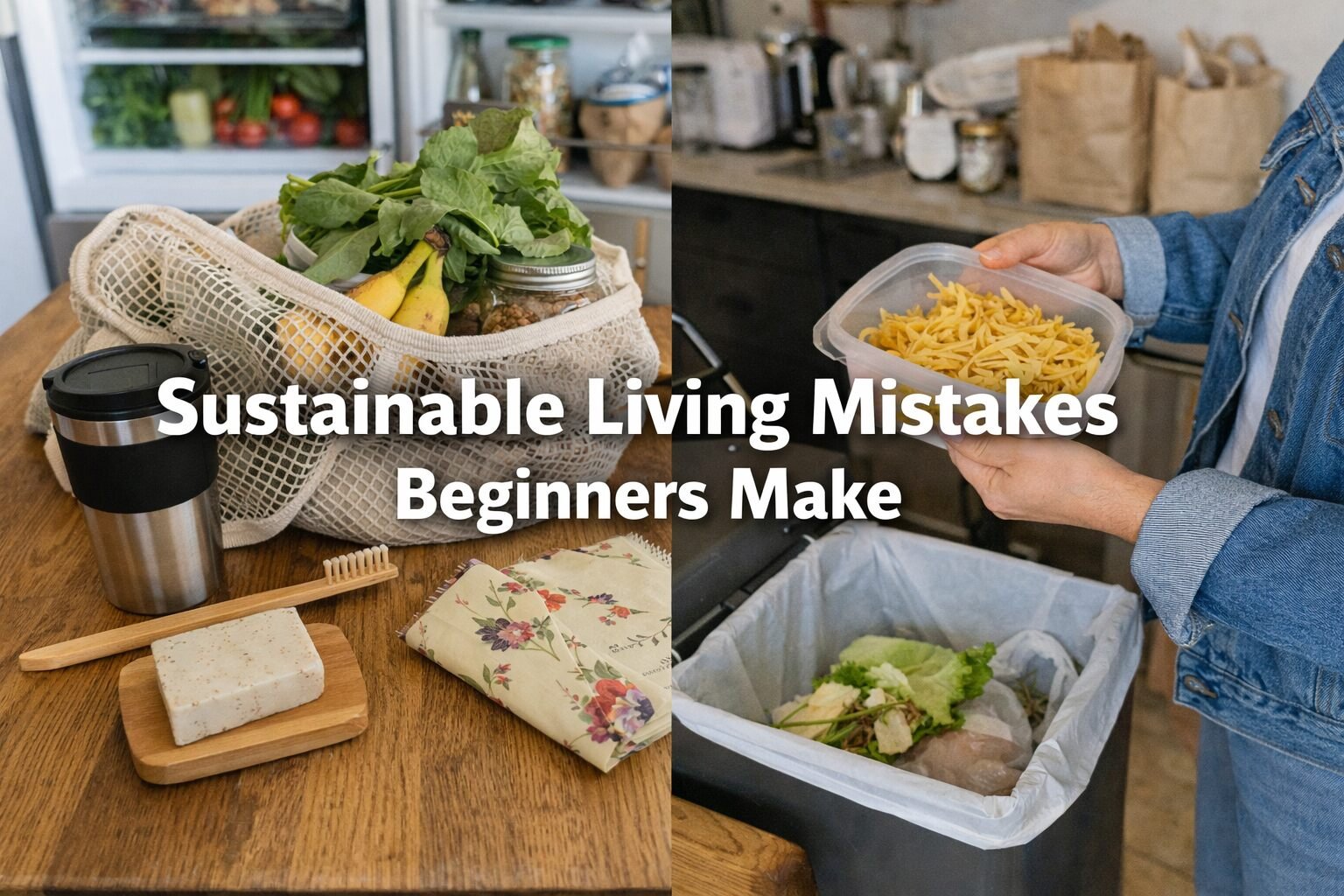
If you’re trying to live more sustainably, it’s easy to feel like you’re doing something wrong. You read about zero waste, plastic-free living, eco-friendly swaps, and suddenly sustainable living feels complicated, expensive, and overwhelming.
The truth is, most beginners do not fail because they do not care. They struggle because of common sustainable living mistakes that are rarely talked about. From buying too many “green” products to focusing only on recycling, small misunderstandings can slow real progress.
If you’re just starting your sustainable living journey, this guide will help you avoid the most common beginner mistakes and focus on what actually reduces waste, lowers consumption, and makes long-term impact.
You do not need to be perfect. You just need to avoid the traps that make sustainable living harder than it needs to be.
Mindset Mistakes Beginners Make
When beginners start sustainable living, the biggest obstacles are often mental, not practical. Before habits change, thinking has to shift. These mindset mistakes quietly sabotage progress.
1. Trying to Change Everything at Once
One of the most common sustainable living mistakes beginners make is attempting a complete lifestyle overhaul in a week. Zero waste kitchen, plant-based diet, plastic-free bathroom, all at once. This usually leads to burnout.
How to avoid it: Choose two or three manageable habits and practise them consistently before adding more.
2. Waiting for the “Perfect” Time to Start
Many people delay starting sustainable living because they feel unprepared. They want the right products, more time, or more knowledge first.
How to avoid it: Start with what you already have. Sustainable living begins with reducing consumption, not buying new tools.
3. Thinking You Must Be Zero Waste Immediately
Beginners often believe that sustainable living means producing no trash at all. When that feels impossible, they give up.
How to avoid it: Focus on reducing waste gradually. Progress matters more than perfection.
4. Believing Small Actions Do Not Matter
It is easy to think that individual changes are insignificant compared to global environmental issues.
How to avoid it: Sustainable living works through consistent behaviour change. Reducing food waste, delaying purchases, and walking short distances add up over time.
5. Giving Up After One Unsustainable Choice
Missing a habit or making an impulse purchase can create guilt that stops momentum.
How to avoid it: Treat sustainable living as a long-term practice. One mistake does not erase your progress.
Consumption Mistakes: Buying Instead of Reducing
One of the biggest sustainable living mistakes beginners make is thinking the solution is to buy better products. But sustainable living is about reducing demand first, not replacing everything with eco-labelled alternatives.
6. Replacing Everything With Eco-Friendly Alternatives
Switching to bamboo toothbrushes, reusable wraps, and organic cleaners sounds responsible. But replacing working items increases manufacturing demand.
How to avoid it: Use what you already own until it wears out. Replace only when necessary.
7. Throwing Away Usable Items to Go Plastic-Free
Some beginners discard plastic containers, bags, or packaging in an attempt to “start fresh.”
How to avoid it: Reuse plastic items as long as possible. The most sustainable product is the one already in your home.
8. Buying Trendy Zero-Waste Kits You Do Not Need
Starter kits often include items you may never use consistently.
How to avoid it: Identify one real problem in your routine, like food waste or impulse shopping, and address that instead of buying a bundle.
9. Confusing Minimalism With Sustainability
Owning fewer things does not automatically mean lower environmental impact, especially if items are replaced frequently.
How to avoid it: Focus on durability and long-term use rather than aesthetics.
10. Not Questioning Whether You Need Something at All
The most overlooked sustainable living habit is simply asking, “Do I need this?”
How to avoid it: Introduce a pause before non-essential purchases. Reducing consumption is more powerful than switching brands.
Waste & Recycling Mistakes Beginners Make
When beginners think about sustainable living, recycling is often the first thing that comes to mind. But focusing only on waste disposal can distract from what really reduces environmental impact.
11. Thinking Recycling Is Enough
Recycling feels responsible, but it deals with waste after it has already been produced.
How to avoid it: Prioritise reducing and reusing first. Preventing waste has a greater impact than managing it later.
12. Not Learning Local Recycling Rules
Many beginners assume all plastics, cartons, or paper can go into the recycling bin. This leads to contamination and rejected batches.
How to avoid it: Check your local guidelines and follow them carefully. Recycling correctly is as important as recycling at all.
13. Ignoring Food Waste at Home
Food waste is one of the most common sustainable living mistakes. Many households throw away edible food without realising the environmental cost.
How to avoid it: Plan meals, store food properly, and use leftovers creatively before buying more groceries.
14. Trying to Eliminate All Single-Use Products Instantly
Cutting out every single-use item overnight often leads to frustration.
How to avoid it: Reduce gradually. Focus on the most frequent single-use items in your routine instead of aiming for total elimination.
15. Focusing Only on Packaging Instead of Total Consumption
Beginners often obsess over packaging while ignoring the overall volume of what they consume.
How to avoid it: Reduce the number of purchases first. Lower consumption reduces packaging automatically.
Food & Grocery Mistakes Beginners Make
Food choices are one of the biggest parts of sustainable living, but they are also where many beginners make avoidable mistakes. If you are starting your sustainable living journey, these food-related habits can quietly increase waste and consumption.

16. Overbuying Fresh Produce
One common sustainable living mistake beginners make is buying more fruits and vegetables than they can realistically use. The intention is good, but unused produce often ends up in the bin.
How to avoid it: Shop with a plan. Buy smaller quantities more frequently and build meals around what you already have.
17. Not Planning Meals Before Shopping
Sustainable living for beginners often fails at the grocery store. Shopping without checking your pantry leads to duplicate purchases and forgotten ingredients.
How to avoid it: Check your fridge and cupboards before making a list. Plan simple meals that use overlapping ingredients.
18. Letting Leftovers Expire
Many people trying to live sustainably still waste cooked food because they forget about it.
How to avoid it: Store leftovers in visible containers and schedule a “leftovers night” each week.
19. Believing You Must Go Fully Vegan to Make an Impact
Some beginners assume sustainable living requires extreme dietary changes. When that feels unrealistic, they give up entirely.
How to avoid it: Start by reducing high-impact foods gradually. Even one or two plant-based meals a week supports sustainable living without pressure.
20. Buying Imported “Superfoods” Unnecessarily
In the effort to eat sustainably, beginners sometimes purchase imported health foods that travel long distances.
How to avoid it: Focus on simple, locally available staples. Sustainable living is about lowering demand, not chasing trends.
According to the Food and Agriculture Organization, a significant portion of food produced globally is lost or wasted, much of it at the household level.
Energy & Lifestyle Mistakes Beginners Make
Sustainable living is not only about waste and food. Everyday energy use and lifestyle habits also shape your environmental impact. Many beginners overlook these areas or assume they require expensive upgrades.
21. Driving Short Distances Automatically
One common sustainable living mistake is using a car for trips that could be walked or cycled. Short drives add up in fuel use and emissions.
How to avoid it: For nearby errands, choose walking when possible. Even replacing a few short trips each week reduces impact over time.
22. Running Half-Empty Laundry Loads
Beginners often focus on eco-friendly detergents but ignore how frequently they wash clothes.
How to avoid it: Wash full loads and rewear clothes when they are not dirty. Reducing frequency saves both water and electricity.
23. Overusing Heating or Cooling Without Checking Habits
Sustainable living for beginners sometimes becomes about buying energy-efficient appliances rather than adjusting behaviour.
How to avoid it: Before upgrading, review habits. Adjust temperature settings slightly and improve natural ventilation when possible.
24. Ignoring Repair as an Option
When something breaks, replacement feels easier. But frequent replacement increases resource demand.
How to avoid it: Attempt small repairs first. Fixing minor damage extends product life and supports sustainable living without extra cost.
25. Quitting Because It Feels Overwhelming
The most common sustainable living mistake beginners make is giving up entirely. Conflicting advice and high standards can make progress feel impossible.
How to avoid it: Focus on consistency, not perfection. Choose a few manageable habits and build from there.

How to Start Sustainable Living Without These Mistakes
If you recognise yourself in some of these sustainable living mistakes, that is normal. Almost every beginner makes a few of them. What matters is adjusting your approach before frustration sets in.
Start small. Choose two or three habits that feel realistic in your current routine. For example, you might begin by planning meals more carefully, introducing a purchase pause before non-essential spending, or walking short distances instead of driving.
Focus on reduction before replacement. Instead of asking what eco-friendly product you should buy, ask what you can use longer, repair, or avoid purchasing altogether.
Build consistency over intensity. Sustainable living works best when habits become normal rather than dramatic. Gradual changes are easier to maintain and have more lasting impact.
Most importantly, avoid perfection thinking. Sustainable living is not about doing everything right. It is about doing better, consistently.
FAQs About Sustainable Living Mistakes
What is the biggest sustainable living mistake beginners make?
The biggest sustainable living mistake beginners make is trying to change everything at once. This often leads to burnout. Sustainable living works better when you start small and build consistent habits over time.
Is buying eco-friendly products a common beginner mistake?
Yes, buying eco-friendly products too quickly is a common beginner mistake. Sustainable living is more about reducing consumption and using what you already own rather than replacing everything immediately.
Why do beginners quit sustainable living?
Many beginners quit sustainable living because they feel overwhelmed or believe they must be perfect. Conflicting advice and unrealistic standards can make progress feel impossible.
How can I avoid common sustainable living mistakes?
You can avoid common sustainable living mistakes by focusing on reduction first, planning meals carefully, delaying non-essential purchases, and choosing consistency over perfection.
Does sustainable living have to be complicated?
No, sustainable living does not have to be complicated. Simple habits like reducing waste, reusing items, and being mindful about consumption are often enough to make meaningful progress.