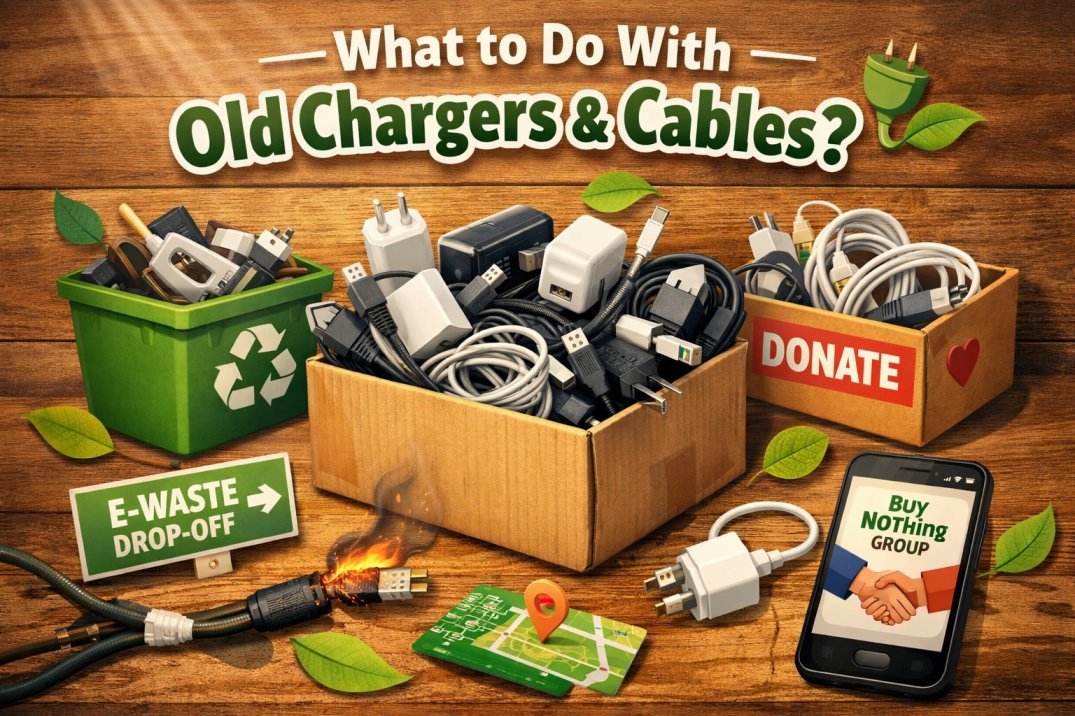
If you live in the US, you probably have a drawer like this.
You open it to grab one charger. You see ten.
Old iPhone cables. Random USB cords. A laptop brick from 2014. Something with a connector you don’t even recognise.
You don’t throw them away because you’re not sure you should.
Here’s the clear answer.
Don’t put old chargers, cables, or small electronics in your regular trash. Reuse what still works. Donate safe extras. Recycle anything broken or obsolete through a certified e-waste drop-off location.
These items count as electronic waste in the US. They contain copper wiring, plastic insulation, and internal circuitry. Some contain lithium components. That means landfill disposal is the wrong move.
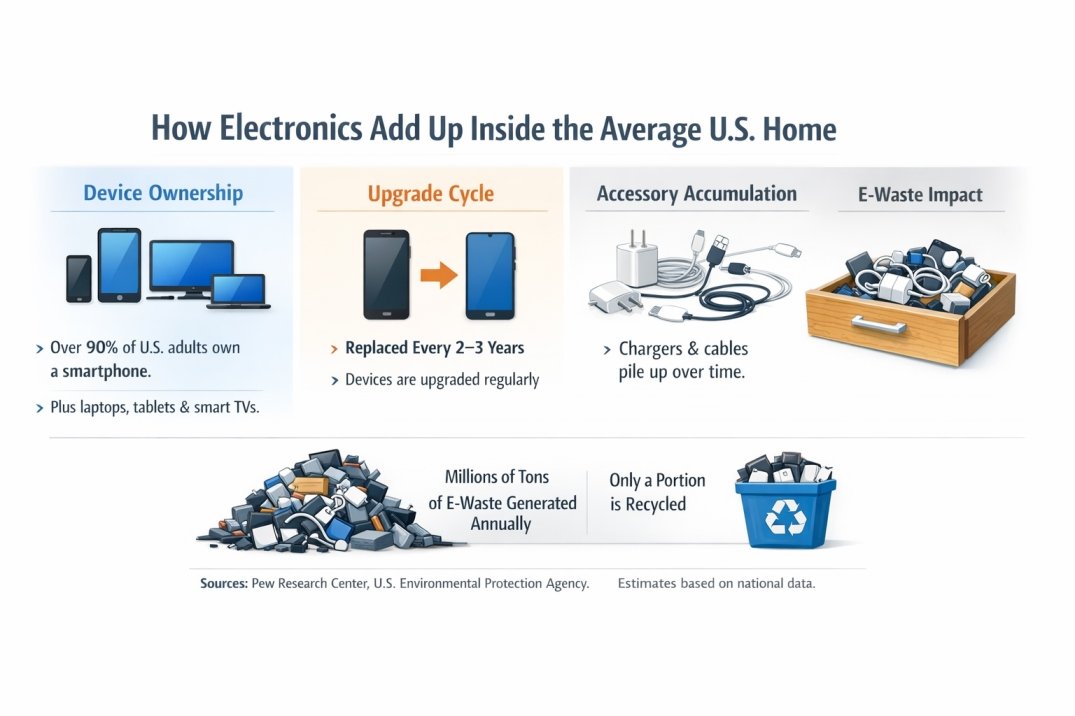
You’re not “bad at decluttering.” Tech just changes faster than accessories wear out. Phones get replaced every few years. Cables stay behind.
So this isn’t about guilt.
It’s about having a simple system.
Why You Shouldn’t Throw Chargers and Cables in the Trash
Do not put old chargers and cables in your regular trash. They are classified as electronic waste and contain materials that require specialised recycling. Proper disposal prevents environmental contamination and reduces fire risk.
Electronic waste includes small accessories such as power adapters, USB cables, and earbuds because they contain copper wiring, plastics, and internal circuitry. These materials do not safely break down in landfills. The U.S. Environmental Protection Agency confirms that electronics should be recycled through approved programmes rather than discarded in household waste streams.
Electronic waste is one of the fastest-growing waste streams in the United States. Small items are often overlooked, but collectively they represent significant material loss and environmental impact. Recycling ensures metals are recovered and hazardous components are handled safely.
How to Decide What to Keep, Donate, or Recycle
Use a simple three-category system. Keep only what supports active devices. Donate safe, working extras. Recycle anything damaged or obsolete.
What Should You Keep?
Keep chargers and cables that match devices you currently use. Limit yourself to one backup per device type. If you have not used it in the past 12 months, it likely does not need to stay.
Store kept items in a dry, cool space. Label them clearly to avoid future clutter. Remove and recycle anything that shows wear, heat damage, or fraying.
What Can You Donate?
Donate chargers and cables that are fully working, clean, and free from fraying or overheating. Universal accessories such as USB-C cables, Lightning cables, and standard power adapters are most useful. Test each item before donating.
Many community organisations, schools, and local reuse groups accept working electronics accessories. You can also use tools like Earth911 or Greener Gadgets to find nearby reuse options, and some retailers such as Staples offer in-store recycling if donation is not possible.
If an item contains batteries or shows damage, choose a certified recycling programme such as Call2Recycle instead of donating it.
What Should You Recycle?
Recycle cables with exposed wires, bent connectors, or inconsistent charging. Recycle power bricks that overheat, buzz, or show visible cracks. Recycle outdated chargers for devices you no longer own.
Take these items to a certified e-waste drop-off site or approved retailer programme. Do not place them in curbside recycling or regular trash. Proper recycling prevents landfill waste and reduces fire risk in waste systems.
Are Old Chargers and Cables a Fire Risk in Your Home?
Your home is likely built with drywall, wood framing, insulation, and enclosed wall cavities. That means heat and sparks spread fast once ignition starts. A damaged charger tucked in a drawer or plugged behind furniture can become a hidden risk.
Many households store extra cables in tight spaces, stacked in boxes, nightstands, or garage bins. When cords are bent sharply or power bricks are buried under clutter, internal wiring can weaken. Over time, this increases the chance of overheating or short circuits.
Across many U.S. counties, waste facility fires have increased due to improperly discarded electronics and battery-containing devices. When chargers or small electronics are crushed in trash trucks or compactors, lithium components can ignite. Recycling through certified programmes reduces this risk at both the household and community level.
How Should You Store Chargers and Cables Before Recycling?
Store old chargers and cables in a cool, dry place away from heat sources. Avoid leaving them plugged in or stacked tightly under pressure. This reduces strain on internal wiring and lowers overheating risk.
Keep cords loosely coiled rather than tightly wrapped around power bricks. Sharp bends weaken insulation and can expose internal wires over time. If you see cracks, fraying, or loose connectors, separate those items for immediate recycling.
Remove batteries from small devices if they are detachable. Store battery-containing items separately until you take them to a certified e-waste location. This helps prevent accidental compression or short-circuiting in storage.
Where Can You Recycle Chargers and Small Electronics in the U.S.?
You can recycle old chargers, cables, and small electronics through certified e-waste programmes and approved drop-off locations. Do not place them in curbside recycling unless your local authority clearly allows it. Always confirm accepted items before visiting.
Here are reliable options across the U.S.:
- Earth911 – Use their ZIP code search tool to find certified recycling centres near you.
- Greener Gadgets – Helps locate electronics recycling sites by location.
- Staples – Offers in-store recycling for many small electronics and accessories.
- Call2Recycle – Specialises in battery and battery-containing device recycling.
Before you go:
- Check the website for accepted items.
- Remove personal data from devices if applicable.
- Separate batteries if required.
Recycling policies vary by state and county. Checking local guidelines prevents rejected drop-offs and ensures safe handling.
What Materials Are Recovered When You Recycle Chargers and Cables?
Recycling chargers and cables allows valuable materials to be recovered instead of buried in landfills. Even small accessories contain reusable metals and plastics. Proper processing separates these components safely.
When you recycle cables and power adapters, facilities typically recover:
- Copper from internal wiring
- Aluminium from shielding and internal parts
- Small circuit boards from power bricks
- Certain plastics used in insulation and casing
Copper is especially valuable because it can be reused repeatedly without losing conductivity. This reduces the need for new mining and lowers environmental impact. Even small household quantities matter when scaled across millions of homes.
Recycling also prevents hazardous components from entering soil or groundwater. Circuit boards may contain trace metals that require controlled handling. Certified e-waste facilities are designed to manage this safely.
Why You Should Use This System, Especially If You’re Building a Zero-Waste Home
You should use this system if you want less clutter, lower fire risk, and less waste leaving your home. It gives you a clear decision rule instead of emotional guessing. You act once and move on.
If you’re working toward a zero-waste or low-waste lifestyle, electronics are often the blind spot. People focus on food containers and packaging but ignore drawers full of unused tech. Small electronics add up, and responsible recycling is part of a complete zero-waste home journey.
This system also reduces “just in case” storage habits. Keeping only what supports active devices prevents repeat clutter cycles. A zero-waste home is not about storing everything, it is about circulating materials responsibly.
Common Mistakes People Make With Old Chargers and Cables
Avoid these common errors when handling old electronics at home:
Throwing them in regular trash because they’re small. Size does not determine impact. Chargers and cables still qualify as electronic waste.
Assuming curbside recycling accepts loose wires. Most U.S. recycling systems are not designed to handle small cables. They can damage sorting equipment.
Donating items without testing them first. Passing along faulty chargers shifts risk to someone else. Always confirm safe working condition.
Keeping outdated connectors for devices you no longer own. If the device is gone, the accessory has no functional purpose.
Continuing to use frayed or overheating chargers. Visible wear and excess heat are safety warnings, not cosmetic issues.
Storing battery-powered accessories indefinitely. Old power banks and small lithium devices degrade over time and should be recycled promptly.
FAQs About Old Chargers and Cables
Can I throw old phone chargers in the trash?
No, you should not throw old phone chargers in regular trash. They are classified as electronic waste and contain metals and circuitry that require specialised recycling. Use a certified e-waste drop-off location instead.
Are USB cables recyclable?
Yes, USB cables are recyclable through certified e-waste programmes. They contain copper wiring and plastic insulation that can be processed properly. Do not place them in curbside recycling unless your local authority explicitly allows it.
Where can I recycle chargers near me?
You can use ZIP-code search tools such as Earth911 or Greener Gadgets to locate nearby certified recycling centres. Many retailers, including Staples, also accept small electronics for recycling. Always confirm accepted items before visiting.
Are old chargers a fire hazard?
Yes, damaged or overheating chargers can pose a fire risk. Frayed insulation and degraded internal components increase the chance of short circuits. Recycle any charger that shows visible wear or excessive heat.
Can I donate used charging cables?
Yes, you can donate fully working, undamaged charging cables. Local schools, community centres, and neighbourhood reuse groups often accept them. Do not donate cracked, loose, or overheating accessories.
What should I do with broken power adapters?
Broken power adapters should be recycled through a certified e-waste programme. Do not store them long term or place them in household trash. Proper recycling ensures safe handling of internal components.