Be honest for a second.
When you hear “live more sustainably,” do you immediately think:
That sounds expensive.
Organic groceries. Solar panels. Ethical clothing. Eco-labelled everything. It can feel like sustainability is a lifestyle upgrade, not a practical choice.
And in a time when everyday costs already feel heavy, the last thing you want is another financial burden disguised as responsibility.
So here’s what we’re really answering:
If you try to live a bit more consciously, eat better, waste less, use less energy – does your monthly spending actually go up? Or does the money just move differently?
Let’s look at it the way it shows up in real life, not in marketing brochures.
What Do We Actually Mean by “Sustainable Living”?
Before we talk about money, we need to clear something up.
Sustainable living doesn’t mean:
- Replacing everything in your house
- Buying only organic food
- Switching to expensive eco brands
- Throwing out perfectly usable items
That version is expensive.
In real life, sustainable living usually looks much simpler:
- Cooking more at home
- Wasting less food
- Using things longer
- Buying fewer but better items
- Reducing energy waste
It’s less about upgrading your lifestyle and more about tightening it.
And that difference is what determines whether it feels expensive… or actually saves you money.
Will Your Monthly Expenses Actually Increase?
This is the real concern. Not climate change or trends, just your monthly budget. If you try to live more sustainably, will your expenses go up?
If you keep your lifestyle exactly the same and simply replace products with eco versions, costs usually rise. Organic brands, ethical clothing, and green-labelled goods often come with a premium. That approach focuses on upgrading what you buy, not changing how you live.
But if sustainability changes your habits instead of your shopping list, the outcome looks different. Cooking more at home, reducing food waste, buying fewer clothes, using things longer, and cutting unnecessary energy use often keep spending stable and sometimes lower it.
The difference isn’t the word “sustainable.” The difference is whether you’re increasing consumption with greener products or reducing consumption altogether.
Food: Is Eating Sustainably More Expensive?
Food is where the cost question feels most real. You see the bill every week.
If sustainable eating means buying premium organic brands, expensive plant-based substitutes, and specialty health products, then yes, your grocery spending can increase.
But that is not the only way to eat sustainably.
In practical terms, it often looks like eating more whole foods and less processed food. Staples like rice, lentils, beans, eggs, oats, potatoes, and seasonal vegetables are still some of the most affordable items in most supermarkets.
What usually drives food costs up is convenience. Regular takeaways, delivery apps, packaged snacks, and sugary drinks add up quickly.
Organic food can be helpful, but it is not the main factor in health or cost. A simple, home-cooked diet using mostly whole ingredients is often both sustainable and affordable.
So the expense depends less on the label and more on your pattern of eating.
Energy and Utilities: Does Going Green Raise Your Bills?
Energy is where people assume costs will rise.
Solar panels, smart home systems, energy-efficient appliances, these sound expensive. And upfront, they often are.
If you decide to install solar or replace all appliances at once, that is a noticeable investment. There’s no pretending otherwise.
But sustainable energy doesn’t always start with big upgrades.
It often begins with smaller shifts:
- Using appliances efficiently
- Improving insulation
- Switching to LED lighting
- Adjusting heating and cooling habits
These changes do not dramatically increase monthly spending. In many cases, they lower it over time.
Large upgrades like solar make financial sense mostly when you plan to stay in the same home for several years. If you move frequently, the payback period may not work in your favour.
So is sustainable energy expensive?
Upfront improvements can be. Ongoing efficiency usually reduces bills. The financial outcome depends on whether you’re making gradual efficiency improvements or jumping into large installations immediately.
Clothing and Everyday Buying: Is Sustainable Fashion More Expensive?
Clothing is another area where sustainability gets labelled as costly.
Ethical brands and sustainable materials often come with higher price tags. Smaller production runs, better fabrics, and fair wages increase the upfront cost. That part is real.
But here’s what matters more than the label: how often you buy.
Fast fashion feels cheap because each item costs less. But frequent purchases, trend-driven shopping, and replacing worn-out pieces quickly can increase your yearly spending without you noticing.
A more sustainable approach usually looks like:
- Buying fewer items
- Choosing better durability
- Wearing clothes longer
- Repairing when possible
- Using secondhand markets
When you reduce how often you buy, total spending often balances out, even if individual items cost more.
So yes, sustainable clothing can be more expensive per item. It is not always more expensive per year.
Transport and Daily Movement: Is It Costlier to Be Eco-Friendly?
Transport can feel like the biggest financial shift.
If sustainable living means buying a brand-new electric car, then yes, that’s a major upfront cost. Electric vehicles are becoming more common, but they are still not the cheapest option for many households.
However, sustainable transport is not limited to vehicle upgrades.
In daily life, it often looks like:
- Driving less
- Combining trips
- Using public transport when possible
- Walking or cycling short distances
- Carpooling
These changes don’t increase expenses. In many cases, they reduce fuel costs, maintenance, and wear and tear.
Fuel, insurance, parking, and repairs are ongoing expenses that people underestimate. Even a small reduction in driving can noticeably lower annual costs.
So is eco-friendly transport expensive?
Buying new technology can be. Changing travel habits is usually cheaper.
Health and Long-Term Costs: Does Sustainable Living Save on Medical Expenses?
This is the part most people don’t calculate.
We often compare grocery bills or appliance prices, but we rarely think about long-term health costs.
When sustainable living overlaps with healthier habits, the impact goes beyond monthly spending.
For example:
- Eating more whole foods and fewer ultra-processed products
- Moving more, walking or cycling instead of driving everywhere
- Reducing exposure to excess sugar and highly refined foods
Over time, these habits are linked to lower risk of lifestyle-related conditions such as obesity, type 2 diabetes, and heart disease.
Chronic conditions are expensive. They often involve ongoing medication, frequent doctor visits, and long-term management.
Better nutrition and daily movement are not instant money savers. The benefit is gradual and long-term. But over decades, preventing or delaying illness can reduce significant medical costs.
This does not mean you must eat only organic food or follow extreme diets. It means that a simpler, more whole-food-based pattern often supports both health and financial stability.
So while sustainable living may not cut your expenses immediately, it can reduce risks that become financially heavy later in life.
Lifestyle-related diseases such as heart disease and diabetes are strongly linked to diet and physical activity, according to the World Health Organization.
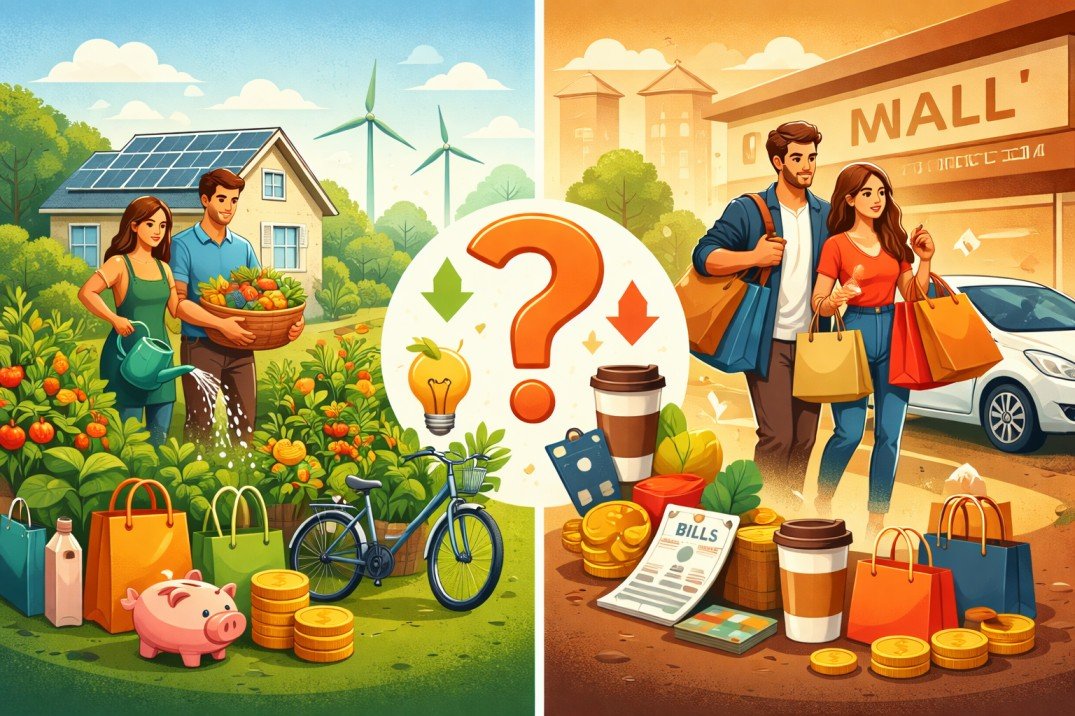
When Is Sustainable Living Actually More Expensive?
It’s important to be clear about this.
Sustainable living can become more expensive in certain situations.
It costs more when you try to replace everything at once. Throwing out usable items to buy eco versions increases spending and creates waste.
It also becomes expensive when sustainability turns into branding. Premium “green” labels, aesthetic home upgrades, and trend-driven purchases often carry higher prices without changing your overall consumption.
Convenience can raise costs too. Ready-made organic meals, specialty health products, and eco-packaged delivery services are usually priced above standard alternatives.
Location matters as well. In areas without public transport, renewable incentives, or local produce access, sustainable choices can be harder and more costly to implement.
So yes, there are real situations where sustainable living increases short-term spending. Pretending otherwise would not be honest.
When Is Sustainable Living the Same Cost or Cheaper?
Sustainable living does not automatically increase spending. In many cases, costs stay stable or even decrease, especially when the focus is on behaviour rather than upgrades.
It stays the same cost when:
- You make gradual changes instead of replacing everything at once
- You use what you already own fully
- You upgrade only when something genuinely needs replacing
- You focus on efficiency rather than aesthetics
This approach shifts spending without expanding it.
It becomes cheaper when:
- You reduce takeaway and cook more at home
- You cut food waste
- You drive less
- You avoid impulse purchases
- You buy fewer, longer-lasting items
- You lower energy use through simple habit changes
These are not premium lifestyle changes. They are consumption reductions.
Where savings quietly add up
- Lower utility bills from efficiency
- Fewer clothing replacements
- Reduced transport costs
- Less money spent on convenience
Sustainable living tends to lower costs when it reduces excess. It raises costs when it upgrades excess.
A Practical Way to Think About It
If you’re trying to decide whether to move toward a more sustainable lifestyle, you don’t need an extreme answer. You need a workable approach.
Start by asking yourself three simple questions:
- Am I replacing something that still works?
If yes, wait. Using what you already own is usually the most sustainable and cost-effective option. - Will this change reduce ongoing expenses?
Some upgrades, like improving insulation or cooking more at home, can lower recurring costs. Others may not. - Is this about health and durability, or branding?
Spending a bit more on quality food or longer-lasting products can make sense. Paying extra for a label without changing habits often doesn’t.
Sustainable living does not require perfection. It does not require you to go fully organic, install solar immediately, or give up comfort.
It works best when it improves resilience in your budget, your health, and your daily systems without increasing pressure.
That’s the version that tends to hold up financially over time.
Final Answer: Should You Be Worried About the Cost?
You don’t need to be worried. But you do need to be realistic.
Sustainable living is not automatically cheaper. It is not automatically more expensive either. It becomes costly when it turns into a shopping upgrade. It becomes financially stable when it reduces excess and improves efficiency.
You do not need to eat only organic food. You need to eat mostly real food.
You do not need to replace everything. You need to stop replacing things too often.
You do not need expensive eco-products. You need fewer unnecessary purchases.
In most households, the biggest savings come from reducing waste, convenience spending, and lifestyle inflation. The biggest costs come from trying to “transform” overnight.
If you move gradually, focus on health and durability, and avoid trend-driven upgrades, sustainable living is often the same cost and sometimes cheaper over time.
The goal is not to live perfectly. It is to live in a way that strengthens your finances and your health instead of quietly weakening them.
That is where sustainability makes financial sense.