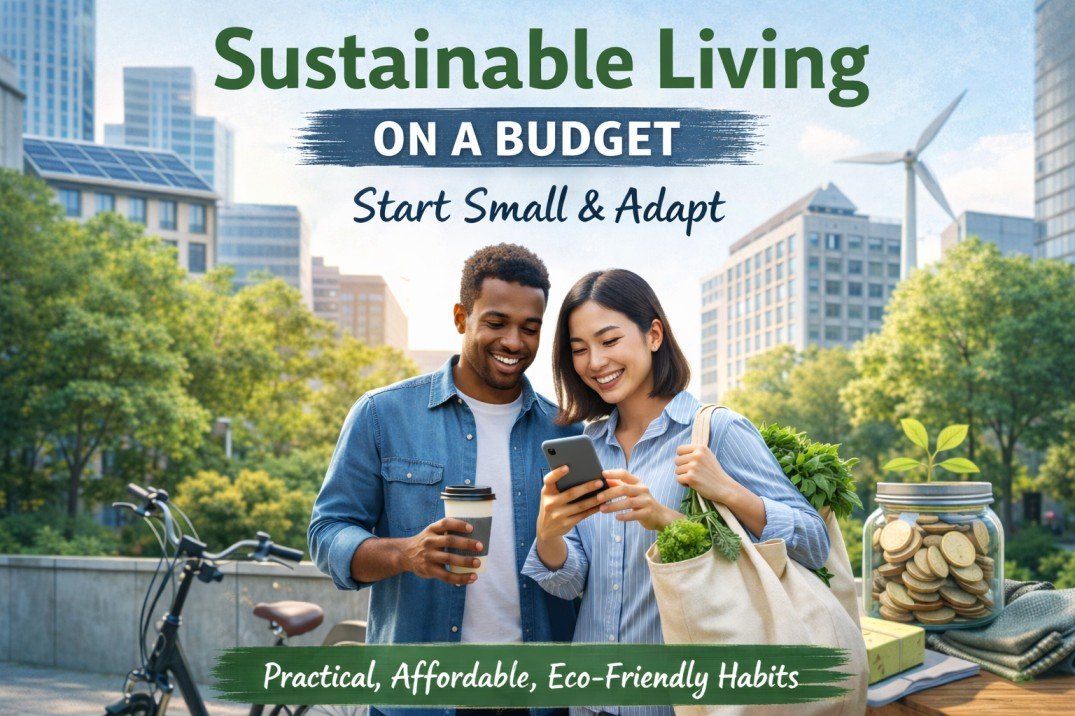
Sustainable living on a budget doesn’t have to mean replacing everything you own or spending heavily on eco-friendly products. For most people, it starts with curiosity, not a shopping list.
Living sustainably is less about big upfront investments and more about small, practical shifts. Reducing waste, using what you already have, cutting energy use, and buying more intentionally are often the most affordable sustainable habits. In fact, many eco-friendly changes lower monthly expenses rather than increase them.
If you want to explore sustainable living without overspending, the key is to start small and adapt as you go. One change at a time. One habit at a time. Over time, those small adjustments build into a lifestyle that supports both your budget and the environment.
Why Sustainable Living Doesn’t Have to Mean High Spending
Sustainable living on a budget starts with perspective. It’s not about buying more eco-friendly products. It’s about buying less, wasting less, and using what you already have.
Many assume green living requires expensive brands or major upgrades. In reality, the most effective changes are behavioural. Planning meals to reduce food waste, repairing items instead of replacing them, and cutting unnecessary energy use can lower both your environmental impact and your monthly expenses.
Affordable sustainable living follows a simple order:
- Reduce consumption
- Reuse what you own
- Replace only when necessary
When you approach it this way, sustainability becomes a gradual shift, not a financial burden.
Start With What You Already Have
Before making any sustainable swaps, look around your home. Most low-cost sustainability begins by fully using what you already own.
Finish current products before switching brands. Repurpose jars and containers instead of buying storage. Keep using appliances that still work. Small decisions like these prevent waste and avoid unnecessary spending.
Extending the life of your belongings is one of the most budget-friendly eco habits. Simple clothing repairs, basic shoe maintenance, and proper care of electronics can delay replacements for years.
Sustainable living on a budget is less about upgrading and more about maximising. The longer you use what you have, the less you need to buy and that benefits both your finances and the environment.
Small Monthly Shifts That Lower Everyday Costs
Once you’ve focused on using what you already own, the next step is adjusting everyday habits. Small monthly shifts often have the biggest long-term impact on both your budget and your environmental footprint.
Food Habits That Reduce Waste
Food waste is one of the easiest areas to improve. Planning meals around ingredients you already have, storing food properly, and freezing leftovers can significantly reduce grocery spending. Cooking simple meals from basic ingredients also tends to cost less than frequent convenience purchases.
Over time, these small adjustments make sustainable eating more affordable and more consistent.
Energy and Water Adjustments
Lowering utility costs does not require major upgrades. Washing clothes at lower temperatures, air drying when possible, switching off standby electronics, and being mindful of heating and cooling settings all reduce energy use.
These habits may seem minor individually, but together they create steady savings month after month. Sustainable living on a budget works best when small efficiencies become routine.
According to the Energy Saving Trust, simple energy-saving habits can significantly reduce household bills over time.
Smart Swaps That Make Financial Sense
Not every eco-friendly product is necessary. But some low-cost swaps can reduce waste and pay for themselves over time.
Simple Reusables That Add Up
A reusable water bottle, sturdy shopping bags, refillable cleaning bottles, or cloth towels in place of paper products can gradually cut recurring purchases. The goal is not to replace everything at once, but to choose items you use often and upgrade them thoughtfully.
When a disposable product runs out, that’s usually the right time to consider a reusable alternative.
Know What Can Wait
Avoid replacing items that still function well. Sustainability is not about discarding usable products for newer “green” versions. Trend-driven kits and aesthetic upgrades often add unnecessary expense.
Sustainable living on a budget works best when replacements happen naturally, not impulsively. Thoughtful timing keeps costs low while progress continues steadily.
The One-Change-at-a-Time Approach
Sustainable living becomes manageable when you stop trying to do everything at once. Instead of a full lifestyle reset, focus on one change at a time.
Choose a single habit to adjust this month. It could be reducing food waste, cutting back on single-use items, or lowering energy use. Let that habit settle into your routine before adding another. This keeps the process steady and realistic.
Pay attention to how each change affects your spending and daily life. If it works, keep it. If it feels impractical, adjust it. Sustainable living on a budget is meant to evolve with you, not pressure you.
Over time, these small changes build naturally. What once felt intentional becomes normal, and your eco-friendly habits grow without large upfront costs or disruption.

How to Track Progress Without Overcomplicating It
Sustainable living on a budget becomes more motivating when you can see the results. You don’t need detailed spreadsheets or complicated apps. A simple check-in each month is enough.
Notice small indicators:
- Has your grocery bill reduced slightly?
- Are you throwing away less food?
- Has your electricity bill stabilised or dropped?
- Are you making fewer impulse purchases?
Tracking doesn’t have to be exact. Even rough comparisons month to month help you understand what changes are working.
When you connect sustainable habits with visible financial outcomes, the lifestyle feels practical rather than abstract. That clarity makes it easier to keep adapting and improving over time.
Common Misconceptions That Make Sustainable Living Feel Expensive
Sustainable living on a budget often feels difficult because of a few common assumptions.
One misconception is that you need to replace everything with eco-friendly alternatives immediately. In reality, using what you already own is usually the more sustainable and more affordable option.
Another belief is that sustainable products are always more expensive. While some items cost more upfront, many eco-friendly habits reduce recurring spending. Planning meals, repairing items, and avoiding unnecessary purchases often save more than any “green” product ever could.
There’s also the idea that sustainability requires perfection. It doesn’t. Missing a habit, adjusting a routine, or prioritising your budget during certain months does not undo your progress.
When you remove these pressures, sustainable living becomes practical. It shifts from a costly commitment to a gradual, adaptable way of managing both your consumption and your finances.
Sustainable Living Is a Direction, Not a Deadline
Sustainable living on a budget is not a one-time decision. It’s a steady shift in how you consume, spend, and manage resources.
Some months you’ll make more progress. Other months you’ll simply maintain what you’ve built. That flexibility is part of the process. The goal is not rapid transformation, but gradual improvement.
When you start small and adapt as you go, sustainable habits become part of your routine rather than a separate effort. Over time, reduced waste, lower recurring expenses, and more intentional purchasing begin to feel natural.
Sustainability works best when it grows alongside your lifestyle and your budget, not ahead of them.
A Simple Framework to Keep Moving Forward
If you ever feel unsure about what to do next, return to this order. It keeps sustainable living practical and budget-friendly.
- Reduce what you don’t truly need.
- Reuse what you already have.
- Repair instead of replacing quickly.
- Share or borrow when possible.
- Replace thoughtfully when the time is right.
This framework prevents unnecessary spending while still allowing progress. It removes pressure and replaces it with clarity.
Sustainable living on a budget is not about chasing trends or achieving a perfect eco-home. It is about making steady, informed choices that align with your finances and your values.
Frequently Asked Questions
Is sustainable living more expensive in the long run?
Sustainable living on a budget often reduces long-term expenses because it focuses on lowering recurring costs. Habits like reducing food waste, cutting energy use, and avoiding impulse purchases usually save money over time. Large investments are optional, not required.
What is the cheapest way to start living sustainably?
The cheapest way to start sustainable living is to reduce unnecessary consumption. Use what you already own, plan meals carefully, switch off unused electricity, and delay non-essential purchases. Awareness is free and often the most powerful first step.
Are reusable products always worth the cost?
Reusable products are worth it when they replace items you buy repeatedly. A water bottle or cloth towel that replaces frequent disposable purchases can gradually pay for itself. The key is replacing something you already use often.
Can you live sustainably in a small apartment?
Sustainable living in small spaces is entirely possible. Simple steps like mindful shopping, energy-saving habits, reducing waste, and growing small herbs indoors make an impact without requiring extra space.
How long does it take to see financial benefits?
Financial benefits from sustainable living vary, but small savings often appear within a few months. Lower grocery waste and reduced utility usage tend to show results relatively quickly when habits are consistent.